
Safety Gear: Ensure PPE (Gloves, Mask, Safety Glasses) is worn to protect against potential acidic decomposition products (SO2, H2S).
Device Check: * Verify the SF6 gas analyzer battery is charged.
Check the external storage container (gas bag or cylinder) if “External Recovery” is required.
Ensure all PTFE sampling hoses are clean and dry.
Environment: Confirm ambient temperature and humidity are within the instrument’s operating range.
Sampling Connection: Connect the high-pressure sampling hose to the GIS gas interface.
Note: The input pressure must be between 0.4 MPa and 2.0 MPa.
Power On: Start the SF6 gas analyzer and allow the sensors (Laser/Capacitive humidity and Electrochemical cells) to stabilize (typically 2–5 minutes).
System Setup: Select the “Standard Diagnosis” mode (e.g., GB/T or IEC standards) for the 110kV equipment grade to enable the Expert Diagnosis System.
Parameter Setting: Set the target flow rate (Default: 150 mL/min).
Start Test: Engage the “One-Click Measurement” function.
The system will automatically regulate flow and monitor SF6 Purity, Humidity, SO2, H2S, and CO.
Data Locking: Once readings stabilize (approx. 60s for purity/toxic gases, up to 3min for capacitive humidity), the system will automatically lock the data.
Expert Diagnosis: Review the results against the 110kV GIS limits.
Purity: Should be 97% or higher (New gas) or 95% or higher (In-service).
Humidity: Typically 150 uL/L or less (or -36°C dew point) for 110kV GIS.
After testing, choose the appropriate gas handling mode based on the GIS status:
| Mode | Action | Pressure Limit |
| Direct Re-pump | Return gas directly to the sampling chamber/GIS. | 0.8 MPa or less |
| External Recovery | Transfer gas to an external cylinder or recovery bag. | 0.8 MPa or less |
| Evacuation | Clean the internal lines (requires optional recovery bag). | Atmospheric |
Data Management: Save the record (supports up to 10,000 entries). Use the USB port to export the test report for the 110kV bay maintenance log.
Sensor Protection: If high levels of SO2 or H2S were detected, allow the unit to run with clean air or “purge” to prevent sensor degradation.
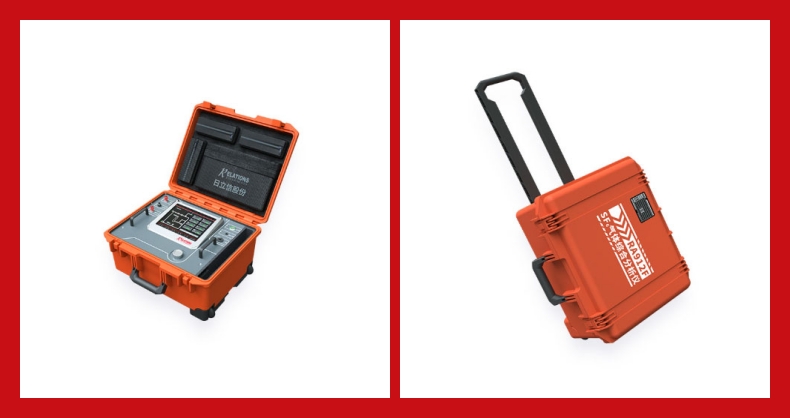
Storage: Secure the “Pull-rod” case and ensure the moving wheels are locked/stowed for transport.
| Component | Frequency | Action |
| Electrochemical Sensors | Annual | Calibrate SO2, H2S, CO against standard gas. |
| Thermal Conductivity Cell | Every 2 years | Check SF6 purity baseline accuracy (+/- 0.5%). |
| Filters/Purifiers | Every 50 tests | Inspect internal dust/moisture filters; replace if discolored. |
| Modular Parts | As needed | Utilize the “Unique Design” to swap modules for repair without total disassembly. |
Yes. Modern comprehensive analyzers featuring a pump-back (recovery) function allow the sampled gas to be directly re-charged into the gas compartment or an external storage bag. This achieves a “zero-emission” workflow, preventing the release of greenhouse gases while maintaining the gas pressure of the 110kV equipment.
According to international and industrial standards (such as IEC 62271 or DL/T 596), the purity of SF6 in-service should typically remain above 95%. For moisture content, the limit for 110kV GIS is generally 150 uL/L (ppmv) or less (equivalent to a dew point of -36°C or lower) to ensure the insulation and arc-extinguishing properties of the equipment.
It depends on your maintenance environment. Laser (TDLAS) sensors offer a faster response time (under 30 seconds) and are highly resistant to contamination from decomposition products. Capacitive (impedance) sensors are a cost-effective, industry-standard choice, though they may require a longer stabilization time (up to 3 minutes) for very low moisture levels.
An Expert Diagnosis System is built-in software that compares real-time measurement data (Purity, SO2, H2S, CO, and Humidity) against pre-loaded regulatory standards. It automatically flags whether the gas quality is “Normal,” “Attention,” or “Abnormal,” reducing the risk of human error during 110kV bay inspections.
To maintain a high accuracy level (e.g., +/- 0.5% for purity), electrochemical sensors (SO2, H2S, CO) should be calibrated annually as they can drift over time. The thermal conductivity and moisture sensors should undergo a full system check every two years to ensure the reliability of the “one-click” automated measurement results.
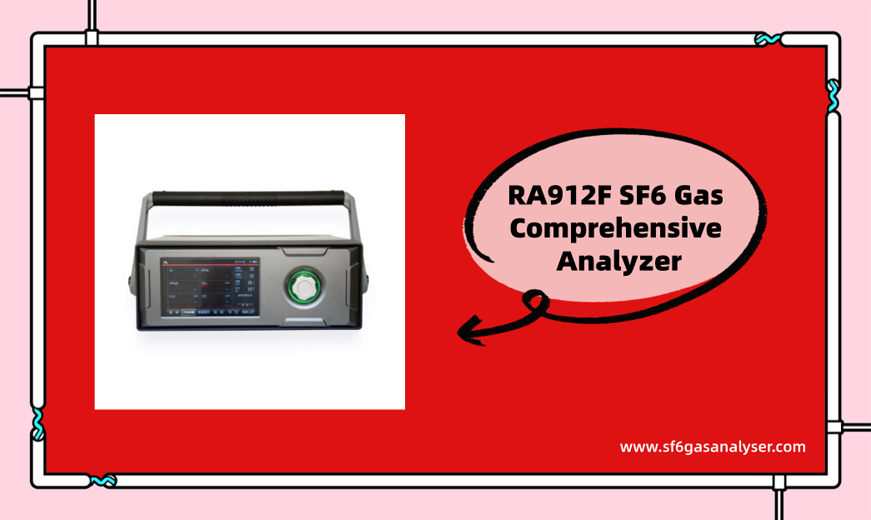
Yes, advanced SF6 analyzers are capable of detecting key decomposition products such as sulfur dioxide (SO₂), hydrogen sulfide (H₂S), and carbon monoxide (CO). These gases form when SF6 decomposes under electrical arcing or overheating conditions. Detecting them helps assess insulation health, identify internal faults, and ensure personnel safety during maintenance of high-voltage equipment.
The humidity (dew point) measurement accuracy in high-quality SF6 gas analyzers typically ranges from ±0.5°C to ±1.0°C dew point under standard operating conditions. Some advanced models using chilled mirror or capacitive polymer sensors may achieve even higher precision. Accuracy can be influenced by factors such as gas pressure, temperature stability, and sensor calibration. Reliable dew point measurement is critical for assessing insulation performance and preventing condensation-related failures in high-voltage equipment.
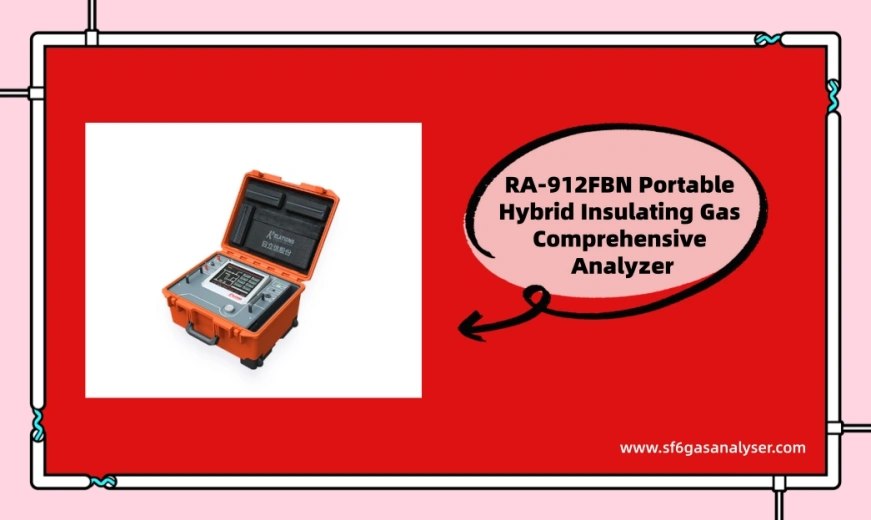
Yes, most SF6 gas analyzers are designed to be portable and field-ready, featuring compact, rugged enclosures—often in pull-handle trolley cases with wheels—for easy transport. They are battery-powered, operate in a wide temperature range, and function reliably in substation environments. Their lightweight design and integrated handles make them suitable for on-site testing of GIS, circuit breakers, and other high-voltage equipment without requiring lab conditions.
Many professional-grade SF6 gas analyzers are designed to comply with key international standards such as IEC 60480 (guidelines for reusing SF6) and IEEE C37.122 (requirements for gas-insulated substations). Compliance ensures accurate measurement of gas quality, safe handling, and alignment with industry best practices for maintenance and emissions control. However, compliance varies by model and manufacturer, so users should verify certification documentation before purchase.