
Accurate sulfur hexafluoride (SF6) gas analysis is essential for safe, reliable, and compliant operation of high-voltage electrical equipment. But even the most advanced SF6 analyzer is only as trustworthy as its last calibration. SF6 analyzer calibration ensures measurement accuracy, regulatory alignment, and operational integrity—making it a cornerstone of compliance with international standards like IEC 60480, IEC 62271-1, and IEEE C37.122.
SF6 is used in gas-insulated switchgear (GIS), circuit breakers, and substations due to its excellent insulating properties. However, when contaminated with moisture or decomposition byproducts (e.g., SO₂, HF, CO), its performance degrades—and safety risks rise.
Key parameters monitored by SF6 analyzers include:
If sensors drift due to aging, temperature stress, or exposure to harsh gases, readings become unreliable—potentially leading to:
Regular calibration corrects these errors, ensuring data you can trust for critical decisions.
Reputable SF6 analyzer calibration follows strict protocols aligned with ISO/IEC 17025 and uses NIST-traceable (or equivalent) reference gases. This means:
This traceability is often required by:
Without it, field test data may be deemed invalid during audits or incident investigations.
IEC 60480 sets strict limits for reused SF6 gas, including:
A miscalibrated analyzer might report 180 ppmv moisture when the true value is 260 ppmv—falsely clearing non-compliant gas for reuse. Calibration prevents such dangerous errors.
Similarly, IEEE C37.122 emphasizes proactive GIS maintenance, including regular gas quality checks. Accurate, calibrated measurements are essential to meet these best practices and avoid unplanned outages.
To maintain compliance and data credibility, follow these industry-recommended steps:
Modern portable analyzers often store this data internally or sync to cloud platforms for easy reporting.
Properly calibrated SF6 analyzers deliver tangible benefits:
For utilities, industrial plants, and service contractors, calibration isn’t optional—it’s a risk-mitigation imperative.
SF6 analyzer calibration is far more than routine maintenance—it’s a vital compliance safeguard. By ensuring accurate, traceable, and standards-aligned measurements, calibration protects personnel, equipment, and the environment while meeting global regulatory expectations. In high-voltage operations, an uncalibrated analyzer doesn’t just give wrong answers—it creates compliance gaps that can lead to fines, failures, or safety incidents.
✅ Expert Tip: Always verify that your calibration certificate covers every sensor in your device. Partial calibration = partial compliance.
Yes, advanced SF6 analyzers are capable of detecting key decomposition products such as sulfur dioxide (SO₂), hydrogen sulfide (H₂S), and carbon monoxide (CO). These gases form when SF6 decomposes under electrical arcing or overheating conditions. Detecting them helps assess insulation health, identify internal faults, and ensure personnel safety during maintenance of high-voltage equipment.
The humidity (dew point) measurement accuracy in high-quality SF6 gas analyzers typically ranges from ±0.5°C to ±1.0°C dew point under standard operating conditions. Some advanced models using chilled mirror or capacitive polymer sensors may achieve even higher precision. Accuracy can be influenced by factors such as gas pressure, temperature stability, and sensor calibration. Reliable dew point measurement is critical for assessing insulation performance and preventing condensation-related failures in high-voltage equipment.
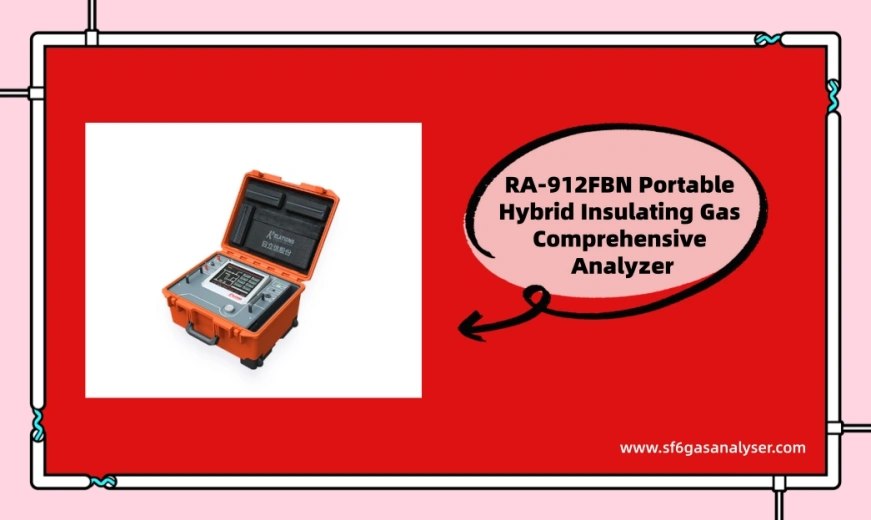
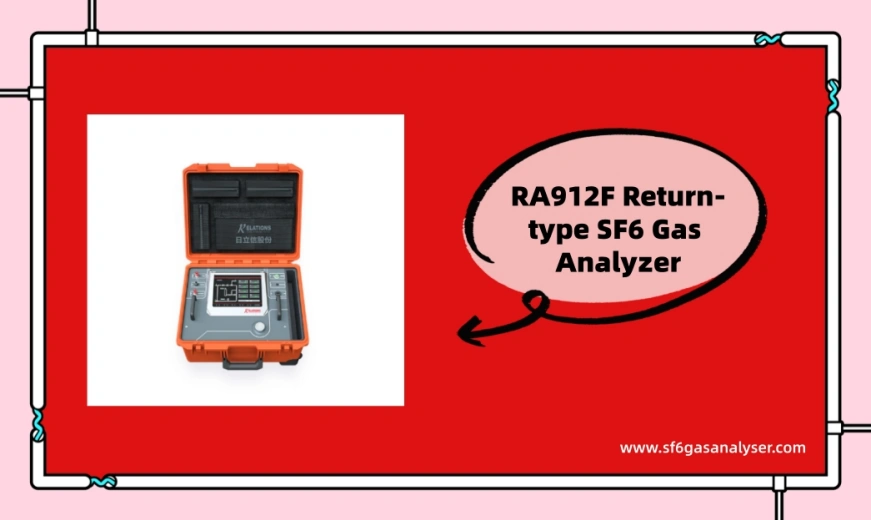
Yes, most SF6 gas analyzers are designed to be portable and field-ready, featuring compact, rugged enclosures—often in pull-handle trolley cases with wheels—for easy transport. They are battery-powered, operate in a wide temperature range, and function reliably in substation environments. Their lightweight design and integrated handles make them suitable for on-site testing of GIS, circuit breakers, and other high-voltage equipment without requiring lab conditions.
Many professional-grade SF6 gas analyzers are designed to comply with key international standards such as IEC 60480 (guidelines for reusing SF6) and IEEE C37.122 (requirements for gas-insulated substations). Compliance ensures accurate measurement of gas quality, safe handling, and alignment with industry best practices for maintenance and emissions control. However, compliance varies by model and manufacturer, so users should verify certification documentation before purchase.