
In the rapidly evolving landscape of 2026 high-voltage grid maintenance, the integrity of Gas Insulated Switchgear (GIS) remains the cornerstone of operational reliability. As global energy transitions place higher loads on existing infrastructure, the demand for precision monitoring of Sulfur Hexafluoride (SF6) has shifted from periodic checks to rigorous, data-driven diagnostic protocols. The modern high-precision SF6 gas analyzer measuring purity, humidity, and dew point for efficient on-site testing and data storage is no longer just a measurement tool—it is an essential instrument for environmental compliance and asset longevity.
SF6 is prized for its exceptional dielectric strength and arc-quenching capabilities. However, its performance is highly sensitive to impurities. Contaminants such as moisture (humidity) and decomposition products (SO2, CO, H2S) can drastically reduce insulation levels and cause internal corrosion.
A comprehensive SF6 gas analyzer must provide a holistic view of gas health. By integrating purity, humidity, and decomposition product sensors into a single portable unit, technicians can execute complex diagnostics in a single sampling cycle. This efficiency is vital for maintaining uptime in critical 110kV to 1000kV substations.
To meet the “High-Precision” designation, an analyzer must utilize advanced sensing technologies that offer stability and repeatability under varying field conditions.
Utilizing thermal conductivity principles, our analyzer achieves a measurement range of 0% to 100% with a maximum allowable error of only +/-0.5%. With a response time of 60 seconds or less, it provides immediate confirmation of whether the SF6 concentration meets the required insulation thresholds.
Moisture is the primary catalyst for the formation of toxic and corrosive byproducts. Our system offers two high-tier options:
Laser Sensing: For ultra-fast response (30 seconds or less) and high accuracy (+/-1 degree C in typical ranges).
Resistive-Capacitive Sensing: For robust, long-term stability across a wide dew point range of -60 to +20 degrees C.
Electrochemical sensors provide granular detection of breakdown products. These are critical for identifying internal arcing or overheating before they lead to catastrophic equipment failure.
SO2 and H2S: Detection range of 0-100 uL/L ensures even the earliest signs of insulation distress are captured.
CO: Monitoring up to 500 uL/L assists in identifying carbon-based insulation degradation.
In 2026, environmental regulations regarding fluorinated gases are stricter than ever. Traditional “vent-to-atmosphere” or simple “bag-collection” methods are increasingly obsolete.
The core advantage of this high-precision SF6 gas analyzer is its integrated Recovery and Pump-Back system.
Direct Pump-Back: The system can overcome internal GIS pressures (up to 0.8 MPa) to return the sampled gas directly to the original sample chamber (pressure switch). This ensures zero gas loss and maintains the precise pressure balance required for high-voltage stability.
Flexible Recovery: If the gas is found to be contaminated, the system can divert the sample to an external cylinder or recovery bag (at atmospheric pressure), preventing the re-introduction of moisture or SO2 into the GIS.
This “closed-loop” approach directly supports corporate ESG (Environmental, Social, and Governance) goals by achieving zero emissions and zero pollution during routine testing.
Efficiency in on-site testing is determined by how quickly a technician can move from “Connection” to “Conclusion.”
Complexity is the enemy of accuracy in the field. Our “One-Key” function automates the flow control (defaulting to a precise 150 mL/min) and data locking process. This eliminates human error and ensures that every test follows a standardized operating procedure (SOP).
Beyond merely displaying numbers, the integrated expert system compares real-time data against pre-loaded international and industry standards. It provides an immediate “Pass/Fail” status based on selected criteria, empowering technicians to make informed decisions on-site regarding gas replacement or equipment maintenance.
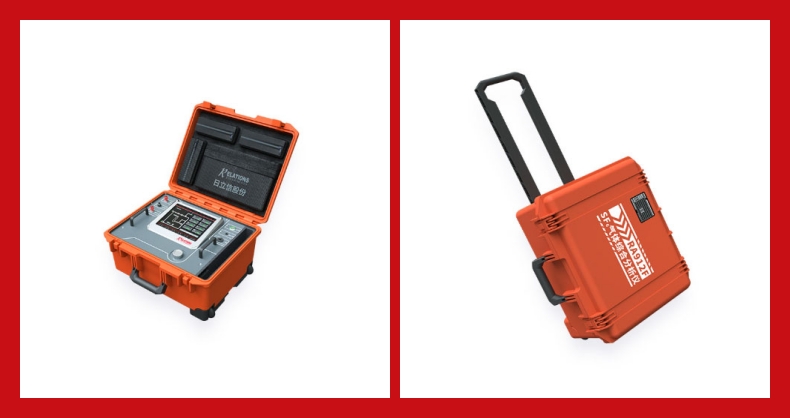
The SF6 gas analyzer is housed in a rugged, trolley-case (pull-rod) design. Equipped with high-durability wheels at the bottom, it can be easily transported across gravel-filled substation yards or multi-level platforms, ensuring that the technology is always exactly where the measurement is needed.
In the era of the “Digital Twin” and smart grids, data that lives only on a screen is of limited value.
The device features a massive storage capacity of up to 10,000 data sets. Each entry includes timestamps and parameter logs, providing a comprehensive historical record of the equipment’s health.
Via a high-speed USB interface, data can be exported for integration into Asset Management Systems (AMS). This facilitates trend analysis—allowing engineers to predict potential failures months in advance by tracking the gradual rise of moisture or decomposition levels.
| Parameter | Specification |
| Input Pressure Range | 0.4 to 2.0 MPa |
| Pump-Back/Recovery Pressure | 0.8 MPa or less |
| Flow Rate | 100 to 300 mL/min (Default 150 mL/min) |
| SF6 Purity Accuracy | +/-0.5% |
| Dew Point Range | -60 to +20 degrees C |
| SO2/H2S Resolution | 0.1 uL/L |
| Data Storage | 10,000 Records (USB Exportable) |
Choosing a high-precision SF6 gas analyzer measuring purity, humidity, and dew point for efficient on-site testing and data storage is a strategic decision for any power utility or industrial plant. It represents a commitment to technical excellence, environmental responsibility, and operational cost-saving.
By consolidating multiple sensors into a single, automated, zero-emission platform, you ensure that your high-voltage assets are protected by the most rigorous diagnostic technology available today.
Yes, advanced SF6 analyzers are capable of detecting key decomposition products such as sulfur dioxide (SO₂), hydrogen sulfide (H₂S), and carbon monoxide (CO). These gases form when SF6 decomposes under electrical arcing or overheating conditions. Detecting them helps assess insulation health, identify internal faults, and ensure personnel safety during maintenance of high-voltage equipment.
The humidity (dew point) measurement accuracy in high-quality SF6 gas analyzers typically ranges from ±0.5°C to ±1.0°C dew point under standard operating conditions. Some advanced models using chilled mirror or capacitive polymer sensors may achieve even higher precision. Accuracy can be influenced by factors such as gas pressure, temperature stability, and sensor calibration. Reliable dew point measurement is critical for assessing insulation performance and preventing condensation-related failures in high-voltage equipment.
Yes, most SF6 gas analyzers are designed to be portable and field-ready, featuring compact, rugged enclosures—often in pull-handle trolley cases with wheels—for easy transport. They are battery-powered, operate in a wide temperature range, and function reliably in substation environments. Their lightweight design and integrated handles make them suitable for on-site testing of GIS, circuit breakers, and other high-voltage equipment without requiring lab conditions.
Many professional-grade SF6 gas analyzers are designed to comply with key international standards such as IEC 60480 (guidelines for reusing SF6) and IEEE C37.122 (requirements for gas-insulated substations). Compliance ensures accurate measurement of gas quality, safe handling, and alignment with industry best practices for maintenance and emissions control. However, compliance varies by model and manufacturer, so users should verify certification documentation before purchase.