Understanding IEC 60376 Purity Standards for Reused SF6 in UK Electrical Infrastructure
Sulfur hexafluoride (SF6) remains an essential insulating and arc-quenching medium across the UK’s electrical transmission and distribution networks, despite its significant global warming potential. With increasingly stringent environmental regulations and corporate sustainability targets, the proper management of SF6 has become not just an operational necessity but a strategic imperative. This article explores the critical IEC 60376 purity standards for reused SF6 in UK contexts, examining how advanced reclamation technologies can ensure compliance while supporting the nation’s net-zero ambitions.
The UK’s SF6 Regulatory Landscape
The UK’s approach to SF6 management has evolved significantly following its departure from the European Union. The Fluorinated Greenhouse Gases Regulations 2015 (as amended) establish strict controls on SF6 handling, requiring comprehensive tracking, reporting, and leak prevention measures. Energy companies face substantial financial penalties for non-compliance and uncontrolled emissions, driving investment in sophisticated gas recovery and purification systems.
The UK’s legally binding commitment to net-zero greenhouse gas emissions by 2050 has intensified focus on SF6 management strategies. The Department for Business, Energy & Industrial Strategy (BEIS) has indicated that SF6 emissions must decrease by at least 79% by 2030 compared to 1990 levels – a target that cannot be achieved without comprehensive gas reclamation programs operating to internationally recognized purity standards.
IEC 60376: Technical Requirements for Reused SF6
The IEC 60376 standard specifies critical purity parameters for technical-grade SF6, establishing maximum allowable concentrations for air, CF4, moisture, mineral oil, and decomposition products. While originally developed for new gas, the UK electrical sector has adopted these specifications as the benchmark for reclaimed SF6, recognizing that equipment performance and longevity depend on gas quality regardless of its origin.
For reused SF6 to meet IEC 60376 specifications in UK applications, the gas must demonstrate:
- Purity ≥ 99.9%
- Air content ≤ 0.05%
- CF4 content ≤ 0.05%
- Moisture content ≤ 5 μg/g
- Acidity ≤ 0.3 μg/g
- Mineral oil ≤ 10 μg/g
- Particulate matter < 1 μm filtration
These stringent requirements demand sophisticated purification technologies capable of removing decomposition products created during electrical arcing events and eliminating moisture ingress accumulated during equipment operation.
Advanced Reclamation Technology: Meeting IEC 60376 Requirements
Modern SF6 reclamation equipment represents a significant technological advancement from earlier generation recovery systems. Integrated processing units now combine multiple purification stages to achieve compliance with IEC 60376 purity standards for reused SF6 in UK power networks.
Advanced systems employ:
- Multi-stage filtration systems that eliminate particulate matter down to sub-micron levels
- Chemical absorption processes targeting specific decomposition products
- Cryogenic separation technology for removing air and CF4 impurities
- Molecular sieve dehydration achieving moisture levels below 1 μg/g
- Precision analytical instrumentation providing real-time purity verification
Particularly noteworthy is the integration of PLC-controlled purification sequences that automatically adjust processing parameters based on incoming gas quality, ensuring consistent output regardless of input conditions. These intelligent systems document each processing cycle, creating the audit trail required by UK environmental regulations.
Validation and Quality Assurance Protocols
Ensuring that reclaimed SF6 meets IEC 60376 specifications requires rigorous testing protocols. UK network operators typically implement a three-tier verification approach:
- In-process monitoring using embedded sensors tracking key parameters during purification
- Post-processing laboratory analysis conducted by UKAS-accredited facilities
- Field verification testing before gas reintroduction into critical equipment
This comprehensive validation framework provides confidence that reclaimed gas performs equivalently to virgin SF6 while satisfying regulatory requirements. Documentation packages must accompany each batch of processed gas, detailing the purification methodology, analytical results, and compliance status against IEC 60376 specifications.
Economic and Environmental Impact Analysis
The business case for investing in IEC 60376-compliant reclamation technology is compelling. With virgin SF6 prices exceeding £25/kg and carbon taxation adding significant operational costs, the economic benefits of effective gas reclamation become immediately apparent. A typical 132kV circuit breaker containing 40kg of SF6 represents nearly £1,000 in gas value alone – not accounting for replacement costs or carbon liability.
Environmentally, the impact is even more significant. SF6 has a global warming potential 23,500 times greater than CO2 over a 100-year horizon. Each kilogram of properly reclaimed SF6 prevents emissions equivalent to 23.5 tonnes of CO2 – comparable to the annual carbon footprint of three average UK households.
Implementation Challenges and Solutions
Despite compelling benefits, implementing effective SF6 reclamation programs faces several challenges within the UK context:
Technical Complexity: Not all recovery units can consistently achieve IEC 60376 specifications. Solution: Investment in integrated processing systems with multiple purification stages and real-time monitoring capabilities.
Skills Gap: Proper operation requires specialized training. Solution: Developing comprehensive certification programs for gas handling personnel, aligned with UK Energy Networks Association guidelines.
Supply Chain Limitations: Many contractors lack sufficient purification capacity. Solution: Strategic partnerships between network operators and specialist gas management service providers with IEC 60376-compliant processing facilities.
Future Outlook and Innovation Directions
The trajectory for SF6 management in the UK clearly points toward closed-loop gas handling systems integrated with digital asset management platforms. Emerging technologies promise further improvements in reclamation efficiency:
- AI-driven optimization of purification parameters based on historical performance data
- Blockchain-based gas tracking providing immutable chain-of-custody documentation
- Advanced membrane separation technologies offering energy-efficient purification alternatives
- Portable analytical systems enabling on-site verification against IEC 60376 requirements
These innovations will further strengthen the business case for comprehensive gas reclamation while supporting the UK’s environmental commitments.
Conclusion
Adherence to IEC 60376 purity standards for reused SF6 in UK electrical infrastructure represents both a regulatory necessity and strategic opportunity. Modern reclamation technologies now provide reliable pathways to achieve these specifications consistently, transforming what was once considered waste gas into a valuable, environmentally responsible resource.
For UK network operators, the choice is increasingly clear: comprehensive SF6 management programs built around IEC 60376 compliance offer the optimal balance of regulatory assurance, operational reliability, and environmental stewardship. As the nation progresses toward its net-zero targets, the proper handling of high-GWP gases like SF6 will remain a critical component of responsible infrastructure management.
Investment in advanced reclamation capabilities today positions utilities not just for regulatory compliance tomorrow, but for leadership in the sustainable energy landscape that defines Britain’s future. The IEC 60376 purity standards for reused SF6 in UK applications thus serve as both technical specification and strategic roadmap for an environmentally conscious electrical sector.
Yes, advanced SF6 analyzers are capable of detecting key decomposition products such as sulfur dioxide (SO₂), hydrogen sulfide (H₂S), and carbon monoxide (CO). These gases form when SF6 decomposes under electrical arcing or overheating conditions. Detecting them helps assess insulation health, identify internal faults, and ensure personnel safety during maintenance of high-voltage equipment.
The humidity (dew point) measurement accuracy in high-quality SF6 gas analyzers typically ranges from ±0.5°C to ±1.0°C dew point under standard operating conditions. Some advanced models using chilled mirror or capacitive polymer sensors may achieve even higher precision. Accuracy can be influenced by factors such as gas pressure, temperature stability, and sensor calibration. Reliable dew point measurement is critical for assessing insulation performance and preventing condensation-related failures in high-voltage equipment.
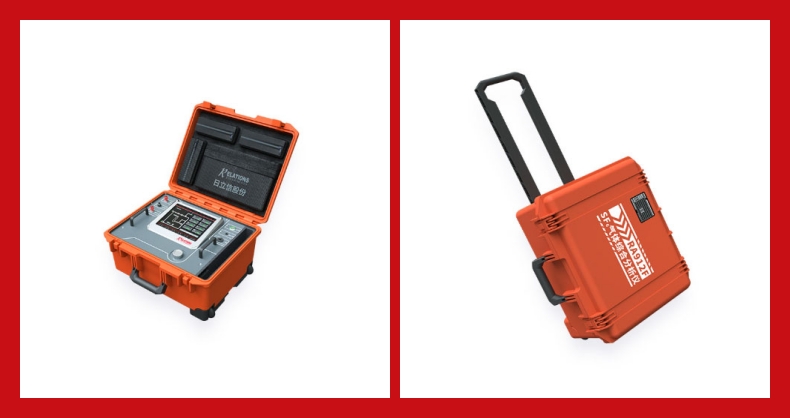
Yes, most SF6 gas analyzers are designed to be portable and field-ready, featuring compact, rugged enclosures—often in pull-handle trolley cases with wheels—for easy transport. They are battery-powered, operate in a wide temperature range, and function reliably in substation environments. Their lightweight design and integrated handles make them suitable for on-site testing of GIS, circuit breakers, and other high-voltage equipment without requiring lab conditions.
Many professional-grade SF6 gas analyzers are designed to comply with key international standards such as IEC 60480 (guidelines for reusing SF6) and IEEE C37.122 (requirements for gas-insulated substations). Compliance ensures accurate measurement of gas quality, safe handling, and alignment with industry best practices for maintenance and emissions control. However, compliance varies by model and manufacturer, so users should verify certification documentation before purchase.