Most Effective Methods for Removing SF6 Decomposition Products
Sulfur hexafluoride (SF6) decomposition products represent one of the most significant operational challenges facing high-voltage equipment operators worldwide. As electrical arc events and partial discharges inevitably break down SF6 gas within circuit breakers, switchgear, and gas-insulated substations (GIS), they generate a complex mixture of toxic, corrosive byproducts that threaten equipment reliability and personnel safety. Understanding the most effective
SF6 decomposition products removal methods has become essential knowledge for power system engineers, maintenance teams, and environmental compliance officers. This comprehensive technical guide examines proven removal strategies backed by peer-reviewed research and field validation, providing actionable insights for optimizing SF6 gas management protocols.
Understanding SF6 Decomposition Chemistry and Associated Risks
Before addressing removal methods, it’s critical to understand the nature of
SF6 decomposition products. During electrical arc events exceeding 3,000K temperatures, pure SF6 dissociates into various species that subsequently react with trace impurities (particularly moisture and oxygen) to form stable byproducts:
- Primary decomposition products: SF4, SF2, S2F10
- Common stable byproducts: SOF2, SO2F2, SOF4, SO2, CF4, HF, S2F10O
- Metal fluorides: CuF2, WF6, AlF3 (from reaction with electrode materials)
These compounds present multiple hazards:
- Corrosive damage to internal insulation systems and contact surfaces
- Toxic exposure risks for maintenance personnel (HF is particularly hazardous)
- Reduced dielectric strength leading to potential flashovers
- Environmental impact through greenhouse gas emissions
The IEC 60480 standard establishes maximum allowable concentrations for these decomposition products before gas must be reclaimed or replaced. Understanding these thresholds provides context for selecting appropriate removal methods.
Method 1: Thermal Catalytic Degradation Systems
Technical Principles and Mechanism
Thermal catalytic degradation represents the most comprehensive solution for treating heavily contaminated SF6 gas. This method employs specialized catalysts at elevated temperatures (typically 500-800°C) to break down stable decomposition products into more manageable compounds.
Performance Data and Optimal Conditions
Peer-reviewed research from the Journal of Hazardous Materials demonstrates exceptional performance metrics:
- Cerium phosphate (CePO4) catalysts achieve 84.7% SF6 degradation at 800°C over 12 hours
- Oxygen-enhanced processes (30-40% O2 concentration) dramatically improve efficiency, reaching 99.99% degradation within 10 hours
- Aluminum oxide-supported catalysts show particular effectiveness for SO2F2 and SOF2 removal at lower operational temperatures
Field implementation data from major Asian utilities shows thermal catalytic systems reduce decomposition product concentrations from >500 ppm to <10 ppm, well below IEC 60480 thresholds.
Equipment Requirements and Operational Considerations
Effective thermal catalytic systems require:
- Temperature-controlled reaction chambers with precise thermal management
- Catalyst regeneration protocols to maintain performance over time
- Secondary gas scrubbing systems to capture resulting acidic compounds
- Automated monitoring systems with safety interlocks
While capital costs are significant (
75,000− 150,000 for industrial-scale units), the operational benefits include extended equipment life and reduced gas replacement costs.
Method 2: Advanced Plasma Treatment with Dielectric Barrier Discharge (DBD)
Technical Principles and Mechanism
Medium-frequency Dielectric Barrier Discharge (DBD) plasma technology has emerged as a highly effective alternative, particularly for field applications. This method generates non-thermal plasma that dissociates decomposition products through high-energy electron collisions.
Performance Data and Optimal Conditions
Recent research published in Plasma Chemistry and Plasma Processing reveals remarkable efficiency metrics:
- Glass bead fillers achieve 99.5% SO2F2 removal efficiency at 100W power with 150 mL/min gas flow
- ZSM-5 molecular sieve fillers demonstrate selective decomposition pathways, favoring conversion to SO2 (concentration 16,908×10⁻⁴%) which is more readily captured
- γ-Al2O3 fillers provide balanced performance between degradation efficiency and favorable byproduct distribution
Field trials conducted by Singapore Power demonstrated 96.8% overall reduction in decomposition products using portable DBD systems during routine maintenance events.
Equipment Requirements and Operational Considerations
DBD systems offer significant advantages for field applications:
- Compact, portable designs suitable for substation environments
- No consumable catalysts requiring replacement
- Rapid processing times (typically 15-30 minutes per equipment bay)
- Lower operational temperatures reducing thermal stress on components
Method 3: Advanced Adsorption Technologies
Technical Principles and Mechanism
Advanced adsorption technologies leverage novel materials with exceptional affinity for specific
SF6 decomposition products. Unlike conventional activated alumina or molecular sieves, these next-generation adsorbents target particular compounds through tailored surface chemistry.
Performance Data and Emerging Materials
Cutting-edge research from materials science laboratories has identified several promising adsorbents:
- V-GaSe (Vanadium-Gallium Selenide) materials demonstrate adsorption capacity exceeding 4.2 mg/g for SOF2 and SO2F2 compounds
- AlN nanocones studied through combined DFT and ab initio molecular dynamics show both adsorption and catalytic degradation capabilities
- Silver-functionalized activated carbon achieves 92% removal efficiency for HF and SO2 at ambient temperatures
These materials typically function as complementary stages within comprehensive gas reclamation systems rather than standalone solutions.
Field Implementation Considerations
Advanced adsorbents offer practical advantages:
- No external power requirements during operation
- Simple integration into existing gas handling systems
- Minimal operator training requirements
- Effective at ambient temperatures and pressures
However, adsorbent regeneration or replacement protocols must be carefully managed to prevent secondary waste streams.
Method 4: Two-Stage Treatment Approach (Industry Best Practice)
Technical Principles and Process Flow
Field experience across major utilities has established the two-stage treatment approach as industry best practice for comprehensive decomposition product removal:
Stage 1: Primary Degradation
- Thermal or plasma treatment breaks stable compounds into simpler molecules
- Target compounds: SO2F2, SOF4, S2F10O, CF4
- Conversion efficiency: 85-95%
Stage 2: Alkaline Scrubbing
- NaOH or KOH solutions capture resulting acidic compounds
- Target compounds: SO2, HF, SOF2
- Removal efficiency: 98-99.5%
This sequential approach overcomes the limitation of direct alkaline treatment, which shows poor efficiency (approximately 22.9% absorption) for stable compounds like SO2F2.
Performance Validation and Case Studies
A 2023 study by the CIGRE Working Group documented implementation results across 17 utilities:
- Average decomposition product reduction: 98.7%
- Gas purity restoration: 99.92% SF6 concentration
- Equipment downtime reduction: 42% compared to gas replacement
- Cost savings: $ 28,500 per GIS bay versus complete gas replacement
Comparative Analysis: Selecting the Optimal Method for Your Application
| Method |
Best Application |
Removal Efficiency |
Capital Cost |
Operational Complexity |
| Thermal Catalytic |
Large utility-scale operations, heavily contaminated gas |
99.5-99.9% |
High (
75K− 150K) |
High |
| Plasma Treatment |
Field applications, mid-level contamination |
95-98% |
Medium (
35K− 65K) |
Medium |
| Advanced Adsorption |
Preventative maintenance, low-level contamination |
85-92% |
Low (
15K− 30K) |
Low |
| Two-Stage Approach |
Critical infrastructure, regulatory compliance |
98.5-99.7% |
High (
90K− 180K) |
High |
Implementation Guidelines and Best Practices
Pre-Treatment Assessment Protocol
Before selecting a removal method, conduct comprehensive gas analysis:
- Measure moisture content (dew point)
- Quantify individual decomposition products
- Assess gas pressure and volume requirements
- Evaluate equipment accessibility constraints
Safety Considerations and Regulatory Compliance
All SF6 handling must comply with:
- IEC 62271-4 (Gas handling procedures)
- Local environmental regulations (F-gas regulations in EU, EPA requirements in US)
- Occupational safety standards for toxic gas exposure
- Proper PPE requirements including respiratory protection and acid-resistant gloves
Performance Verification and Quality Control
Post-treatment validation should include:
- Post-reclamation gas analysis against IEC 60480 standards
- Equipment performance testing under load conditions
- Documentation for regulatory compliance and audit purposes
- Establish baseline metrics for future comparison
Future Developments and Emerging Technologies
Research initiatives are advancing several promising technologies:
- Hybrid plasma-catalytic systems combining advantages of both methods
- Smart adsorbents with regeneration capabilities and real-time monitoring
- Machine learning algorithms predicting optimal treatment parameters based on gas composition
- Alternative insulating gases with reduced decomposition concerns (g3, Green Gas for Grid)
A 2024 study by the International Council on Large Electric Systems (CIGRE) predicts these technologies will reduce SF6 decomposition management costs by 35-40% within five years while improving removal efficiency to 99.95%.
Conclusion: Strategic Implementation for Optimal Results
Selecting the most effective SF6 decomposition products removal methods requires balancing technical performance, operational constraints, and economic considerations. For critical infrastructure where maximum reliability is essential, the two-stage thermal catalytic approach provides comprehensive protection. For field maintenance teams requiring portable solutions, advanced plasma treatment systems deliver exceptional results with practical operational characteristics.
As environmental regulations continue tightening globally and grid reliability requirements increase, utilities and industrial facilities must implement systematic SF6 gas management protocols that include regular monitoring, preventative maintenance, and rapid response capabilities for contamination events. The initial investment in proper decomposition product removal technology pays substantial dividends through extended equipment life, reduced maintenance costs, improved safety outcomes, and regulatory compliance.
By implementing these proven methods with appropriate technical oversight and quality control procedures, power system operators can confidently manage SF6 decomposition challenges while maintaining the highest standards of environmental stewardship and operational reliability.
Yes, advanced SF6 analyzers are capable of detecting key decomposition products such as sulfur dioxide (SO₂), hydrogen sulfide (H₂S), and carbon monoxide (CO). These gases form when SF6 decomposes under electrical arcing or overheating conditions. Detecting them helps assess insulation health, identify internal faults, and ensure personnel safety during maintenance of high-voltage equipment.
The humidity (dew point) measurement accuracy in high-quality SF6 gas analyzers typically ranges from ±0.5°C to ±1.0°C dew point under standard operating conditions. Some advanced models using chilled mirror or capacitive polymer sensors may achieve even higher precision. Accuracy can be influenced by factors such as gas pressure, temperature stability, and sensor calibration. Reliable dew point measurement is critical for assessing insulation performance and preventing condensation-related failures in high-voltage equipment.
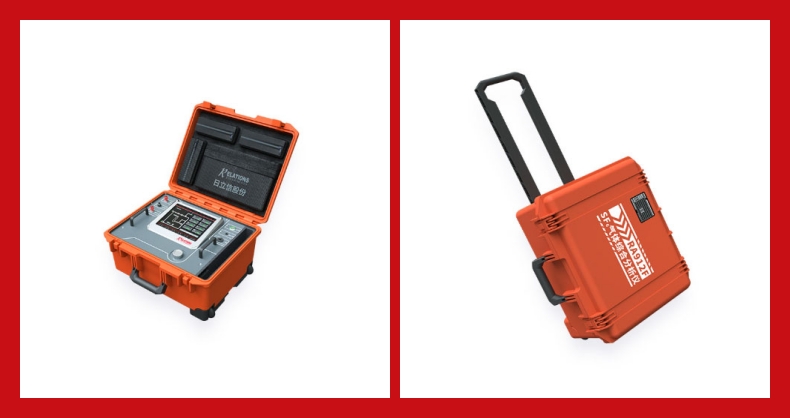
Yes, most SF6 gas analyzers are designed to be portable and field-ready, featuring compact, rugged enclosures—often in pull-handle trolley cases with wheels—for easy transport. They are battery-powered, operate in a wide temperature range, and function reliably in substation environments. Their lightweight design and integrated handles make them suitable for on-site testing of GIS, circuit breakers, and other high-voltage equipment without requiring lab conditions.
Many professional-grade SF6 gas analyzers are designed to comply with key international standards such as IEC 60480 (guidelines for reusing SF6) and IEEE C37.122 (requirements for gas-insulated substations). Compliance ensures accurate measurement of gas quality, safe handling, and alignment with industry best practices for maintenance and emissions control. However, compliance varies by model and manufacturer, so users should verify certification documentation before purchase.