
In which application scenarios or equipment types is an SF6 gas analyzer suitable?

  • Home
  • Support
  • In which application scenarios or equipment types is an SF6 gas analyzer suitable?
service image

In which application scenarios or equipment types is an SF6 gas analyzer suitable?

An SF6 gas analyzer is a critical diagnostic tool designed for use in high-voltage electrical power systems where sulfur hexafluoride (SF6) gas serves as an insulating and arc-quenching medium. Its primary purpose is to assess gas quality—ensuring safety, reliability, and compliance with international standards like IEC 60480, IEC 62271-4, and environmental regulations.

Below are the key application scenarios and types of equipment for which an SF6 gas analyzer is suitable:


1. Gas-Insulated Switchgear (GIS)

  • Most common application: GIS uses SF6 to insulate live components in compact, sealed metal enclosures.
  • Why testing is needed:
    • Detect moisture ingress or air leakage
    • Identify decomposition byproducts from internal arcing
    • Verify gas purity before re-energizing after maintenance
  • Typical measurements: SF6 purity, dew point (moisture), SO₂, HF, air content

2. Circuit Breakers (HV & EHV)

  • Especially SF6-filled high-voltage (HV) and extra-high-voltage (EHV) circuit breakers used in transmission networks.
  • Critical after interruption events: Arcing during fault clearing decomposes SF6.
  • Analyzer use:
    • Assess post-trip gas condition
    • Determine if gas can be filtered/reused or must be replaced
    • Prevent re-closing on degraded insulation

3. Gas-Insulated Lines (GIL)

  • Underground or above-ground transmission lines enclosed in SF6-filled pipes.
  • Long sealed systems prone to slow leaks or moisture diffusion over time.
  • Analyzer role: Monitor gas integrity during commissioning and periodic inspections.

4. Ring Main Units (RMUs) and Medium-Voltage (MV) Switchgear

  • Increasingly use SF6 for compact urban substations.
  • Though smaller in gas volume, contamination still risks flashovers.
  • Portable analyzers enable quick field checks during routine maintenance.

5. Transformers (SF6-Insulated Types – Less Common)

  • Some specialty transformers (e.g., in offshore platforms or space-constrained sites) use SF6 instead of oil.
  • Analyzer ensures dielectric strength remains intact.

6. SF6 Gas Handling & Recovery Operations

  • Used during recovery, filling, or recycling processes:
    • Before reuse: Confirm recovered gas meets IEC 60480 standards
    • After on-site purification: Validate filter performance
    • During cylinder transfer: Check for cross-contamination
  • Essential for closed-loop handling and regulatory reporting.

7. Commissioning of New Equipment

  • Before energizing newly installed GIS or breakers:
    • Verify manufacturer-filled gas meets IEC 60376 (new gas specs)
    • Ensure no air or moisture was introduced during shipping/installation
  • Prevents “infant mortality” failures due to poor initial gas quality.

8. Post-Fault or Post-Maintenance Diagnostics

  • After any internal inspection, repair, or unexpected trip:
    • Test gas to confirm system cleanliness
    • Rule out ongoing partial discharge or overheating (via SO₂ trends)
  • Supports root cause analysis and condition-based maintenance.

9. Environmental & Compliance Auditing

  • Utilities and industrial facilities must track SF6 emissions under:
    • EPA GHG Reporting Rule (Subpart DD) – USA
    • EU F-Gas Regulation – Europe
    • ISO 14064 / GHG Protocol – Global
  • Analyzer data provides accurate gas quality logs for emission calculations and sustainability reports.

10. Training & Certification Programs

  • Used in utility training centers to teach technicians:
    • Safe SF6 handling procedures
    • Interpretation of gas test results
    • Decision-making for gas reuse vs. replacement

✅ Key Features That Make SF6 Analyzers Suitable Across These Applications:

  • Portability: Handheld or cart-mounted for field use
  • Multi-parameter detection: Purity, moisture, SO₂, HF, air
  • Fast response: Results in 2–5 minutes
  • Data logging: For audit trails and trend analysis
  • Compliance-ready: Aligned with IEC, CIGRE, and IEEE guidelines

❌ Where It’s Not Suitable:

  • Non-SF6 equipment (e.g., air-insulated switchgear, oil-filled transformers)
  • Ambient air monitoring (not designed for low-concentration leak detection—use dedicated SF6 leak detectors instead)
  • Continuous online monitoring (unless integrated into a fixed monitoring system; portable units are for spot checks)

Final Summary: Ideal Use Cases at a Glance

Application Purpose of SF6 Analysis
GIS Maintenance Purity, moisture, fault byproducts
Circuit Breaker Servicing Post-interruption gas assessment
Commissioning New Equipment Verify factory gas quality
SF6 Recovery & Recycling Certify gas for reuse
Regulatory Compliance Reporting Document gas condition & emissions
Post-Fault Investigation Diagnose internal issues
RMU / MV Switchgear Checks Prevent insulation failure

In conclusion, the SF6 gas analyzer is indispensable across the entire lifecycle of SF6-insulated electrical assets—from installation and operation to maintenance and decommissioning. By enabling rapid, accurate assessment of gas health, it safeguards grid reliability, protects personnel, and supports global efforts to minimize potent greenhouse gas emissions.
Yes, advanced SF6 analyzers are capable of detecting key decomposition products such as sulfur dioxide (SO₂), hydrogen sulfide (H₂S), and carbon monoxide (CO). These gases form when SF6 decomposes under electrical arcing or overheating conditions. Detecting them helps assess insulation health, identify internal faults, and ensure personnel safety during maintenance of high-voltage equipment.

The humidity (dew point) measurement accuracy in high-quality SF6 gas analyzers typically ranges from ±0.5°C to ±1.0°C dew point under standard operating conditions. Some advanced models using chilled mirror or capacitive polymer sensors may achieve even higher precision. Accuracy can be influenced by factors such as gas pressure, temperature stability, and sensor calibration. Reliable dew point measurement is critical for assessing insulation performance and preventing condensation-related failures in high-voltage equipment.

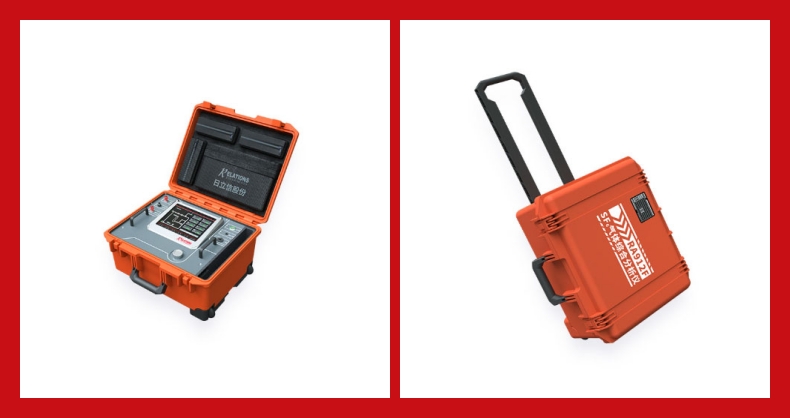
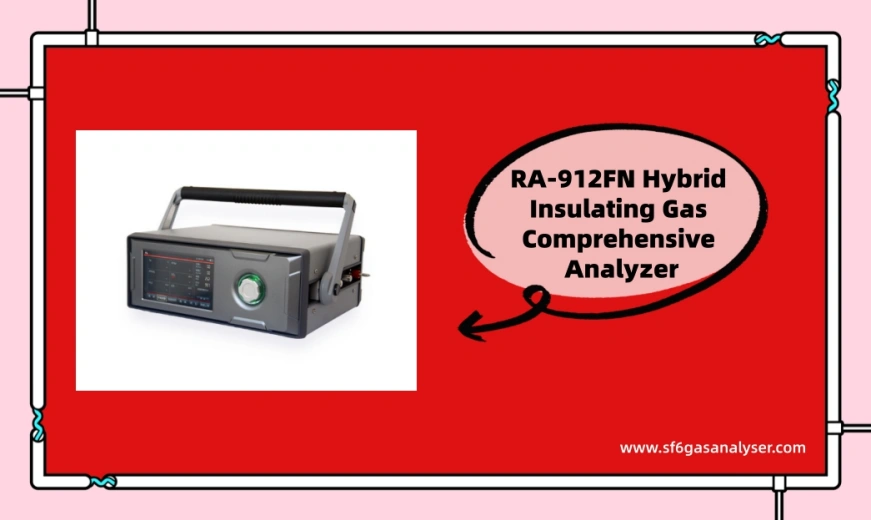
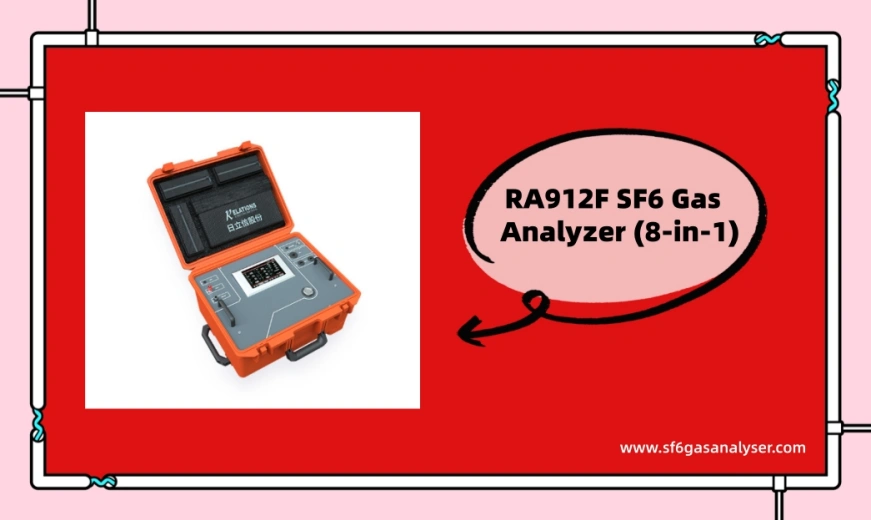
Yes, most SF6 gas analyzers are designed to be portable and field-ready, featuring compact, rugged enclosures—often in pull-handle trolley cases with wheels—for easy transport. They are battery-powered, operate in a wide temperature range, and function reliably in substation environments. Their lightweight design and integrated handles make them suitable for on-site testing of GIS, circuit breakers, and other high-voltage equipment without requiring lab conditions.

Many professional-grade SF6 gas analyzers are designed to comply with key international standards such as IEC 60480 (guidelines for reusing SF6) and IEEE C37.122 (requirements for gas-insulated substations). Compliance ensures accurate measurement of gas quality, safe handling, and alignment with industry best practices for maintenance and emissions control. However, compliance varies by model and manufacturer, so users should verify certification documentation before purchase.