
In the modern electrical infrastructure landscape, Sulfur Hexafluoride (SF6) remains the industry standard for high-voltage insulation and arc quenching. Its exceptional dielectric properties allow for the design of compact Gas-Insulated Switchgear (GIS) and Ring Main Units (RMU). However, the operational benefits of SF6 are coupled with significant environmental responsibilities. As a potent greenhouse gas, any release of SF6 into the atmosphere is a critical concern for utility providers and environmental regulators alike.
The transition toward zero-emission SF6 gas testing for high-voltage switchgear gas service represents a paradigm shift in substation maintenance. By utilizing integrated gas analyzers that can measure purity, humidity, and decomposition products without venting the sample gas, utilities can achieve a “closed-loop” maintenance cycle that protects both the asset and the planet.
High-voltage switchgear relies on the chemical stability of SF6 to operate safely. Over time, factors such as moisture ingress, mechanical wear, and electrical arcing can degrade the gas quality. If left unmonitored, contaminated gas can lead to internal corrosion, insulation breakdown, and catastrophic equipment failure.
Traditional testing methods often resulted in “incidental emissions”—where the gas used for sampling was simply released into the air. In the context of modern ESG (Environmental, Social, and Governance) targets, this is no longer acceptable. Zero-emission SF6 gas testing for high-voltage switchgear gas service ensures that every milliliter of gas extracted for analysis is accounted for, either through re-injection or safe recovery.
A professional gas service protocol must address multiple chemical vectors to provide a true “health report” of the switchgear. Our integrated analyzer focuses on three core pillars:
The primary function of SF6 is insulation. A drop in purity usually indicates the presence of air or nitrogen, which significantly lowers the dielectric strength. Using thermal conductivity principles, our system measures purity from 0 to 100% with a high degree of precision (±0.5%), ensuring the medium is capable of suppressing high-energy arcs.
Moisture is the most common contaminant in GIS. When combined with electrical discharges, it reacts with SF6 to form hydrofluoric acid—a substance that eats away at internal insulators. Our analyzer offers two high-tier options:
Laser Sensing: For rapid, ultra-precise readings (response time ≤30s).
Resistive-Capacitive: For stable, long-term field reliability.
The presence of sulfur dioxide, carbon monoxide, or hydrogen sulfide is a “biometric” indicator of internal stress. SO2 and H2S are direct results of electrical arcing or partial discharge, while CO indicates the overheating of organic insulating materials. By quantifying these gases using electrochemical sensors, technicians can diagnose internal faults without ever opening the gas chamber.
The core of zero-emission SF6 gas testing for high-voltage switchgear gas service is the ability to manage the sample gas after the measurement is complete. Our analyzer is designed with a unique internal pumping and bypass system.
After the measurement data is locked, the device can re-pressurize the sample and pump it directly back into the original gas chamber (up to 0.8MPa). This “closed-loop” approach ensures that the total volume of gas in the switchgear remains unchanged.
In scenarios where direct re-injection is not preferred, the gas can be recovered into external cylinders or optional gas bags. This flexibility allows for the consolidation of waste gas for industrial-scale purification later, ensuring that zero gas is lost to the atmosphere during the field service process.
Data is only as good as the decisions it informs. Our analyzer features a built-in Expert Diagnosis System. This software compares the quantitative results (ppm levels of SO2 or CO, and dew point temperatures) against pre-set international standards like IEC 60480.
One-Key Measurement: Simplifies the complex task of multi-parameter testing, reducing human error.
Auto-Locking Data: The system identifies when a reading has stabilized and automatically saves the result.
Massive Storage: Capable of holding 10,000 records, allowing for year-on-year trend analysis of specific substation assets.
USB Export: Facilitates easy integration into broader Asset Management Systems (AMS).
For high-voltage gas service, technical accuracy is non-negotiable. Our device is engineered to meet the following benchmarks:
Input Pressure Range: 0.4 ~ 2.0 MPa (Compatible with high-pressure GIS).
Purity Response Time: ≤ 60s.
Humidity Response Time: ≤ 30s (Laser option).
Decomposition Ranges: 0 ~ 100 μL/L (SO2/H2S); 0 ~ 500 μL/L (CO).
Battery Life: High-capacity lithium battery for full-day field operation.
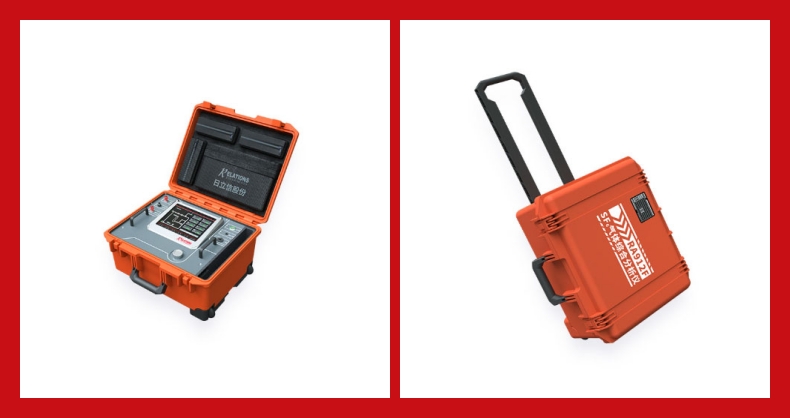
Portability: Rugged trolley-case design with integrated wheels for easy transport across gravel substation yards.
Investing in zero-emission SF6 gas testing for high-voltage switchgear gas service provides a clear return on investment (ROI) through three main channels:
Gas Cost Mitigation: SF6 gas is expensive. By eliminating gas loss during testing, utilities save thousands of dollars annually in replacement gas costs.
Asset Life Extension: Predictive diagnostics allow for “clean-up” operations before internal damage becomes permanent, extending the life of the switchgear by decades.
Regulatory Compliance: As governments move toward stricter F-gas reporting and carbon taxes, having a documented zero-emission testing protocol protects the company from heavy fines and reputational damage.
How should this technology be deployed?
Commissioning Checks: Establishing a baseline “birth record” of gas quality for new assets.
Routine Maintenance: Performing annual purity and humidity checks to track seal integrity.
Post-Fault Analysis: Quickly determining the severity of an internal arc following a circuit breaker trip.
As the global power industry shifts toward more sustainable practices, the tools we use must evolve. Zero-emission SF6 gas testing for high-voltage switchgear gas service is the definitive solution for modern substation care. By integrating high-precision sensing, intelligent diagnostics, and a commitment to zero-pollution gas handling, our analyzer ensures that the grid remains powered and the environment remains protected.
In the competitive world of high-voltage maintenance, precision is the only path to reliability. Ensure your gas service is not only accurate but also environmentally responsible.
Yes, advanced SF6 analyzers are capable of detecting key decomposition products such as sulfur dioxide (SO₂), hydrogen sulfide (H₂S), and carbon monoxide (CO). These gases form when SF6 decomposes under electrical arcing or overheating conditions. Detecting them helps assess insulation health, identify internal faults, and ensure personnel safety during maintenance of high-voltage equipment.
The humidity (dew point) measurement accuracy in high-quality SF6 gas analyzers typically ranges from ±0.5°C to ±1.0°C dew point under standard operating conditions. Some advanced models using chilled mirror or capacitive polymer sensors may achieve even higher precision. Accuracy can be influenced by factors such as gas pressure, temperature stability, and sensor calibration. Reliable dew point measurement is critical for assessing insulation performance and preventing condensation-related failures in high-voltage equipment.
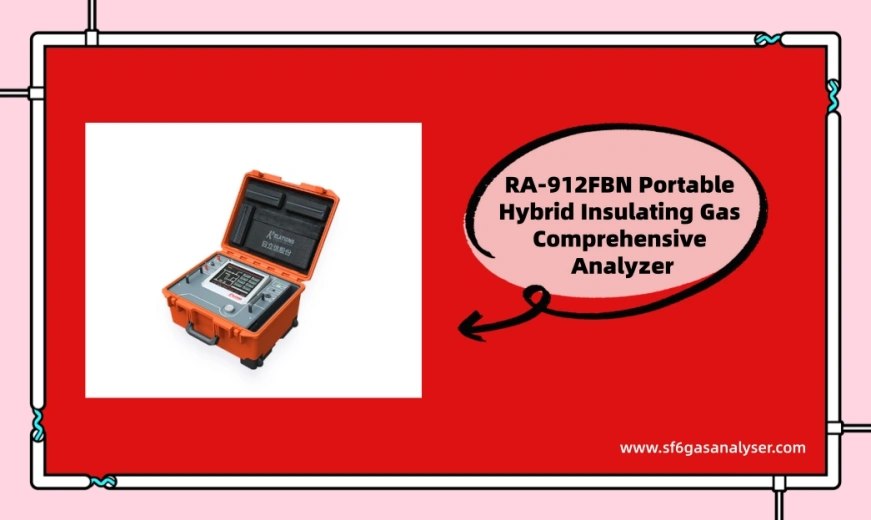
Yes, most SF6 gas analyzers are designed to be portable and field-ready, featuring compact, rugged enclosures—often in pull-handle trolley cases with wheels—for easy transport. They are battery-powered, operate in a wide temperature range, and function reliably in substation environments. Their lightweight design and integrated handles make them suitable for on-site testing of GIS, circuit breakers, and other high-voltage equipment without requiring lab conditions.
Many professional-grade SF6 gas analyzers are designed to comply with key international standards such as IEC 60480 (guidelines for reusing SF6) and IEEE C37.122 (requirements for gas-insulated substations). Compliance ensures accurate measurement of gas quality, safe handling, and alignment with industry best practices for maintenance and emissions control. However, compliance varies by model and manufacturer, so users should verify certification documentation before purchase.