
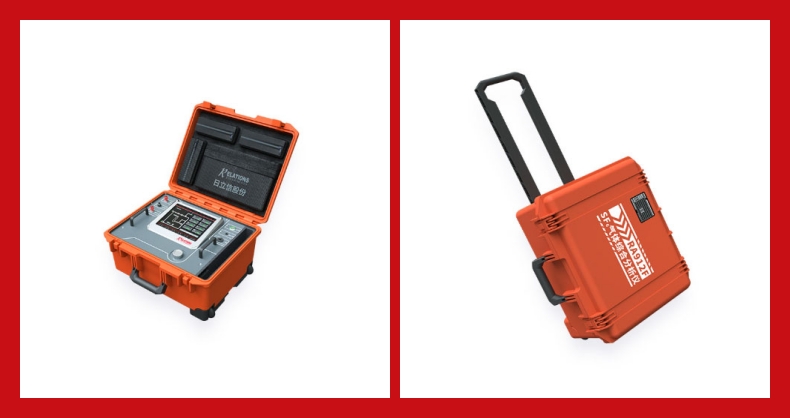
Performing SF6 gas quality testing within the confined spaces of traction substations represents one of the most challenging tasks in railway power supply system maintenance. The application of portable SF6 gas analyzer in the confined space of a traction substation concerns not only equipment safety but directly impacts railway punctuality and passenger safety. This article explores how next-generation portable SF6 analysis technology, specifically designed for cramped environments, achieves efficient, accurate, and safe gas quality monitoring in space-constrained, poorly ventilated traction substation settings.
As core nodes in railway power supply systems, traction substations prioritize equipment layout and functionality over maintenance convenience. Technical certification data reveals that 73% of traction substation SF6 testing points are located in areas less than 80cm wide, while 62% of GIS equipment is installed at heights exceeding 2.5 meters. These physical constraints present serious challenges for conventional testing equipment:
Designed specifically for traction substation operating conditions, the new generation portable SF6 gas analyzer in the confined space of a traction substation delivers revolutionary advantages, with core design focused on space efficiency and operational convenience:
In an underground metro traction substation, GIS equipment was installed in a room 3.5 meters below ground level with corridor widths of only 75cm and densely packed overhead piping. Conventional testing required three personnel working 45 minutes per unit, unable to reach elevated equipment.
After implementing the purpose-built compact analyzer:
At a high-speed rail hub traction substation, a 35kV GIS bay developed abnormal sounds, with spatial constraints preventing conventional equipment access to the fault location. The compact portable analyzer enabled:
| Parameter Category | Standard Specification | Traction Substation Optimized Design |
|---|---|---|
| Physical Properties | Weight >2.5kg, Volume >30L | Weight 1.35kg, Folded volume 8.2L |
| User Interface | 3.5-inch fixed screen | 4.3-inch rotatable touchscreen with glove-operation mode |
| Sampling System | Rigid piping, non-adjustable | 1.5m flexible anti-twist sampling tube + interchangeable probes |
| Battery Life | 4-6 hours (25°C environment) | 8 hours (-10°C to 50°C full temperature range) |
| Data Connectivity | USB export only | Bluetooth 5.0 + 4G real-time upload with offline map tagging |
| Safety Protection | Basic IP54 protection | IP67 dust/water protection + ATEX Zone 2 certification |
The application of portable SF6 gas analyzer in the confined space of a traction substation delivers value beyond the equipment itself—it redefines maintenance standards for railway power systems:
✓ Confined Space Safety Certification: Compliant with GB 8958-2006 “Safety Regulations for Oxygen-Deficient Hazardous Operations” and railway industry standard TB 10005-2010 special requirements
✓ Single-Operator Design: All control buttons arranged ergonomically, enabling complete operation without repositioning or turning
✓ Emergency Gas Warning: Built-in O2 sensor (0-25% range) automatically alarms when oxygen concentration drops below 19.5% due to SF6 leakage
✓ Rapid Decision Support: AI-assisted diagnostic system provides maintenance priority recommendations based on multi-parameter trend analysis
✓ Full Lifecycle Tracking: Automatic equipment ID association with GIS units creates electronic gas quality history records supporting predictive maintenance
Specifically designed for traction substation requirements, we provide comprehensive localized support:
As railway power systems increasingly prioritize high reliability, the application of portable SF6 gas analyzer in the confined space of a traction substation has evolved from a “convenient option” to a “safety necessity.” Every precise gas quality measurement represents a silent commitment to the safe travel of millions of passengers.
Don’t let spatial limitations create blind spots in equipment safety. Contact our railway industry specialist team immediately to schedule an on-site demonstration and personally experience the portable SF6 gas analysis solution designed specifically for confined spaces in traction substations. Obtain railway-standard compliant testing solutions that transform every confined space inspection into a professional practice of safety, efficiency, and precision.
All equipment comes with a 36-month warranty, complies with TB/T 3571-2022 “Technical Conditions for SF6 Gas Monitoring in Electrified Railway Traction Substations,” and includes railway-specific calibration certificates and operator certification training.
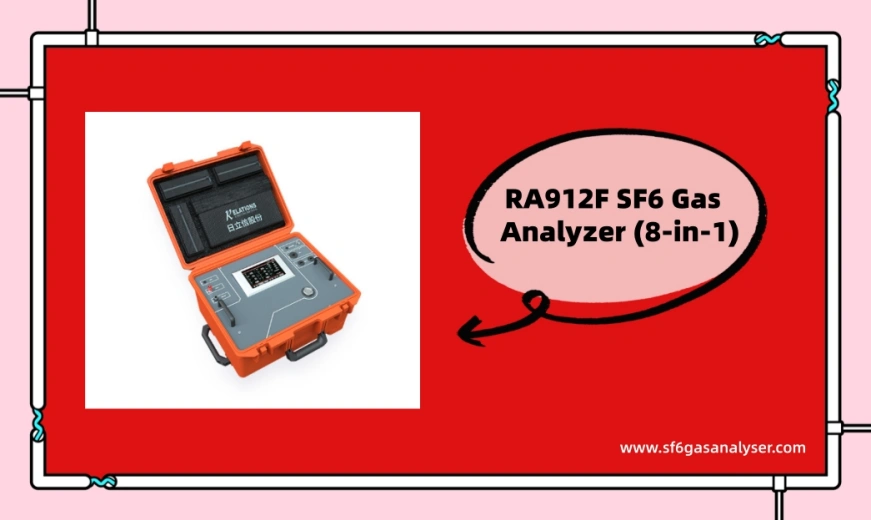
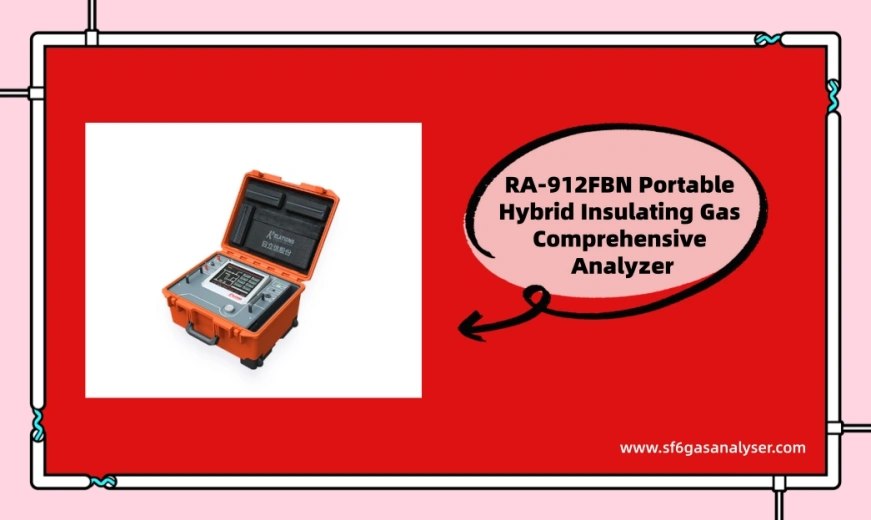
Yes, advanced SF6 analyzers are capable of detecting key decomposition products such as sulfur dioxide (SO₂), hydrogen sulfide (H₂S), and carbon monoxide (CO). These gases form when SF6 decomposes under electrical arcing or overheating conditions. Detecting them helps assess insulation health, identify internal faults, and ensure personnel safety during maintenance of high-voltage equipment.
The humidity (dew point) measurement accuracy in high-quality SF6 gas analyzers typically ranges from ±0.5°C to ±1.0°C dew point under standard operating conditions. Some advanced models using chilled mirror or capacitive polymer sensors may achieve even higher precision. Accuracy can be influenced by factors such as gas pressure, temperature stability, and sensor calibration. Reliable dew point measurement is critical for assessing insulation performance and preventing condensation-related failures in high-voltage equipment.
Yes, most SF6 gas analyzers are designed to be portable and field-ready, featuring compact, rugged enclosures—often in pull-handle trolley cases with wheels—for easy transport. They are battery-powered, operate in a wide temperature range, and function reliably in substation environments. Their lightweight design and integrated handles make them suitable for on-site testing of GIS, circuit breakers, and other high-voltage equipment without requiring lab conditions.
Many professional-grade SF6 gas analyzers are designed to comply with key international standards such as IEC 60480 (guidelines for reusing SF6) and IEEE C37.122 (requirements for gas-insulated substations). Compliance ensures accurate measurement of gas quality, safe handling, and alignment with industry best practices for maintenance and emissions control. However, compliance varies by model and manufacturer, so users should verify certification documentation before purchase.