
Accurate measurement of SF₆ gas purity is essential for the safe and reliable operation of gas-insulated switchgear (GIS), circuit breakers, and other high-voltage equipment. But how exactly does an SF₆ analyzer measure gas purity? Understanding the underlying technology helps utilities, maintenance teams, and EPC contractors make informed decisions about gas handling, compliance, and asset integrity.
This article—written by engineers with field experience in Middle East substation testing—explains the science, standards, and practical implications behind SF₆ purity measurement, in alignment with IEC guidelines and industry best practices.
Per IEC 60480, reused SF₆ must have a minimum purity of 99.9%. Lower purity often indicates air (N₂/O₂) ingress—a common issue after maintenance or due to seal degradation. Even small amounts of air reduce dielectric strength and increase the risk of internal flashover.
Decomposition byproducts like SO₂ or HF are measured in parts per million (ppm) and assessed separately; they don’t significantly impact the percentage purity value but are critical for safety and corrosion control.
Thus, knowing how an SF₆ analyzer measures gas purity is key to interpreting results correctly.
The vast majority of professional SF₆ analyzers—including those from DILO, WIKA, and MBtech—use non-dispersive infrared (NDIR) absorption spectroscopy to determine SF₆ concentration.
Here’s how it works:
✅ Advantages:
This method directly measures SF₆ content, making it the gold standard in field applications.
Some analyzers supplement NDIR with thermal conductivity (TC) sensors:
⚠️ Limitation: TC sensors cannot identify which gas is present—they only detect deviations from pure SF₆. As such, they’re used for cross-validation, not primary purity measurement.
In practice, there are two approaches:
🔍 Key Insight: Only direct NDIR measurement meets the accuracy requirements of IEC 62271-4 and OEM specifications (e.g., Siemens, GE). Always verify your analyzer’s method before relying on its data.
Professional SF₆ analyzers offer:
Field units used in Saudi Arabia, UAE, and other GCC countries must also align with SEC and NCEC technical guidelines, which increasingly reference IEC 62271-4 for gas quality verification.
During a typical GIS service:
Without understanding how the analyzer derives purity, technicians might misinterpret borderline results—leading to unnecessary gas replacement or, worse, unsafe reuse.
When selecting an SF₆ gas quality analyzer, ensure it:
Avoid low-cost handhelds that rely solely on thermal conductivity—they lack the precision required for critical infrastructure.
Knowing how an SF₆ analyzer measures gas purity empowers maintenance teams to act with confidence. Thanks to NDIR spectroscopy, modern analyzers deliver fast, accurate, and standards-compliant results—enabling safer operations, regulatory compliance, and smarter lifecycle decisions for high-voltage assets.
For utilities committed to grid reliability and personnel safety, investing in a professional-grade SF₆ analyzer isn’t optional—it’s essential.
Yes, advanced SF6 analyzers are capable of detecting key decomposition products such as sulfur dioxide (SO₂), hydrogen sulfide (H₂S), and carbon monoxide (CO). These gases form when SF6 decomposes under electrical arcing or overheating conditions. Detecting them helps assess insulation health, identify internal faults, and ensure personnel safety during maintenance of high-voltage equipment.
The humidity (dew point) measurement accuracy in high-quality SF6 gas analyzers typically ranges from ±0.5°C to ±1.0°C dew point under standard operating conditions. Some advanced models using chilled mirror or capacitive polymer sensors may achieve even higher precision. Accuracy can be influenced by factors such as gas pressure, temperature stability, and sensor calibration. Reliable dew point measurement is critical for assessing insulation performance and preventing condensation-related failures in high-voltage equipment.
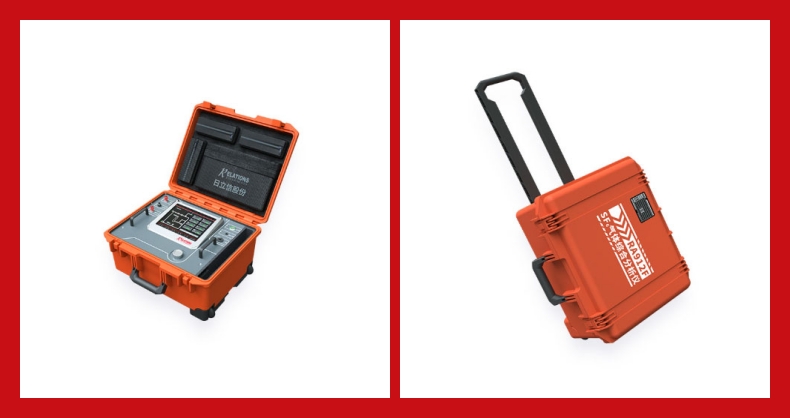
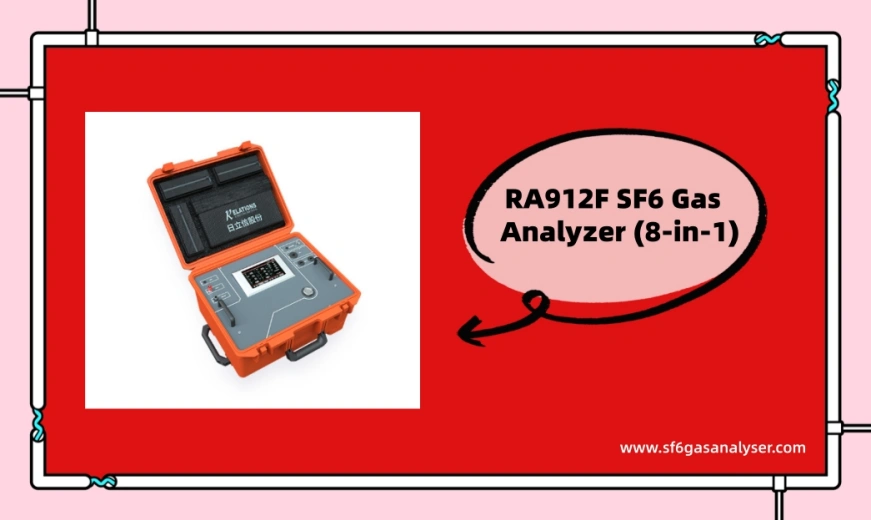
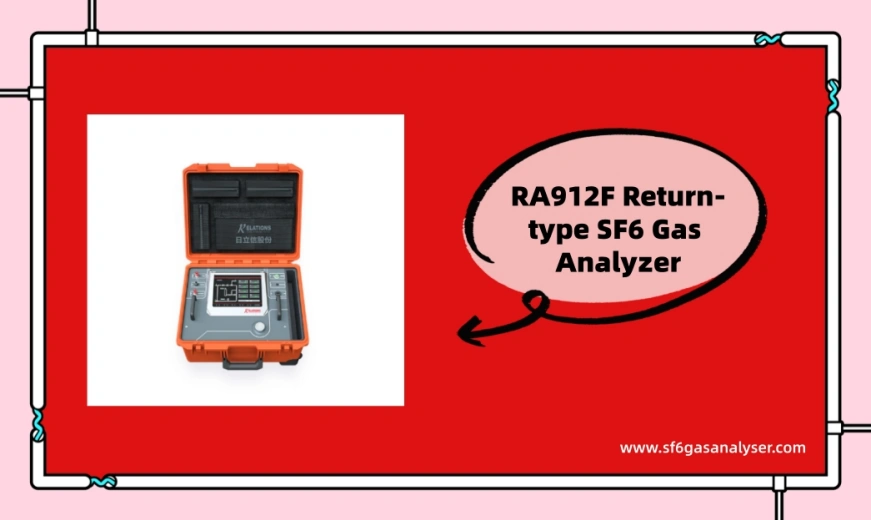
Yes, most SF6 gas analyzers are designed to be portable and field-ready, featuring compact, rugged enclosures—often in pull-handle trolley cases with wheels—for easy transport. They are battery-powered, operate in a wide temperature range, and function reliably in substation environments. Their lightweight design and integrated handles make them suitable for on-site testing of GIS, circuit breakers, and other high-voltage equipment without requiring lab conditions.
Many professional-grade SF6 gas analyzers are designed to comply with key international standards such as IEC 60480 (guidelines for reusing SF6) and IEEE C37.122 (requirements for gas-insulated substations). Compliance ensures accurate measurement of gas quality, safe handling, and alignment with industry best practices for maintenance and emissions control. However, compliance varies by model and manufacturer, so users should verify certification documentation before purchase.