SF6 Gas Disposal vs Regeneration Regulations: Why Smart Utilities Choose Regeneration Over Disposal
In today’s era of climate accountability and grid resilience, the management of sulfur hexafluoride (SF₆)—the most potent greenhouse gas known—has moved from a technical footnote to a regulatory and strategic priority. With global warming potential (GWP) 23,500 times greater than CO₂, SF6 gas disposal vs regeneration regulations are now central to compliance, cost control, and corporate sustainability in the power, oil & gas, and industrial sectors. While outdated practices once favored venting or simple disposal, modern environmental laws and economic realities make one path clear: regeneration is not just preferable—it’s essential.
This article clarifies the evolving regulatory landscape and demonstrates how advanced SF₆ regeneration systems outperform disposal in safety, legality, and lifecycle value.
The Regulatory Shift: From Disposal to Closed-Loop Regeneration
Historically, contaminated or end-of-life SF₆ was often vented or sent to incineration—a practice now heavily restricted or banned:
- EU F-Gas Regulation: Prohibits intentional release; mandates recovery and reuse where technically feasible.
- U.S. EPA GHG Reporting Rule (Subpart DD): Requires tracking of SF₆ emissions; incentivizes recycling via the SF₆ Emission Reduction Partnership.
- India’s CEA Guidelines (2022): Explicitly forbid SF₆ venting during maintenance and require closed-loop handling.
- UAE & GCC Standards: Align with IEC 60480, mandating on-site purification for reuse.
Critically, disposal is no longer a compliant endpoint. Incineration destroys SF₆ but produces toxic byproducts (e.g., HF, SO₂) and requires specialized hazardous waste permits—costly, complex, and environmentally questionable. In contrast, regeneration—the process of purifying used SF₆ to meet IEC 60480 standards—enables safe, legal, and economical reuse.
This regulatory pivot makes understanding SF6 gas disposal vs regeneration regulations crucial for utilities, EPCs, and facility managers worldwide.
Why Regeneration Outperforms Disposal: Core Advantages
✅ 1. Full Regulatory Compliance
✅ 2. Dramatic Cost Savings
Virgin SF₆ costs
20– 50/kg. Disposal fees add
5– 15/kg. Regeneration reduces net gas costs by 60–80%. A single 765 kV GIS bay (80 kg SF₆) saves over $ 2,000 per maintenance cycle.
✅ 3. Environmental Responsibility
Recycling 1 kg of SF₆ prevents ~23.5 tons of CO₂-equivalent emissions. Regeneration supports ESG goals, carbon accounting, and net-zero roadmaps.
✅ 4. Operational Continuity
On-site regeneration enables same-day equipment recommissioning—no waiting for cylinder returns or new gas shipments.
Technical Excellence: How Modern Regeneration Systems Deliver IEC 60480 Compliance
Professional SF6 gas regeneration units are engineered for precision and reliability. Key technical parameters include:
| Parameter |
Performance Standard |
| Final Purity |
≥ 99.9% |
| Moisture (H₂O) |
≤ 8 μg/g (dew point ≤ -40°C) |
| Acidity |
≤ 0.3 μg/g |
| Oil Content |
< 10 ppm |
| Air (N₂ + O₂) |
≤ 0.2% |
| Recovery Rate |
> 99% (down to 1 mbar vacuum) |
| Throughput |
30–100 Nm³/h |
The process involves:
- Filtration: Removes particulates and oil mist.
- Adsorption: Molecular sieves and activated alumina eliminate H₂O, SO₂, and HF.
- Optional Cryogenic Separation: For removing air and CF₄ in heavily contaminated gas.
- Quality Verification: Built-in sensors validate purity before refilling.
Unlike basic “filters” or “dryers,” true regeneration systems restore gas to as-good-as-new condition—approved by OEMs like Siemens, ABB, and GE for use in critical breakers and GIS.
Real-World Regeneration Scenarios: Where It Matters Most
🔧 Scenario 1: Post-Fault Circuit Breaker Maintenance
After interrupting a short-circuit, SF₆ contains high levels of SO₂ and metal fluorides. A mobile regeneration unit on-site purifies the gas within hours, allowing immediate breaker re-energization—avoiding weeks of downtime.
🏗️ Scenario 2: New Substation Commissioning
During GIS installation, moisture ingress or air pockets may contaminate fill gas. Instead of costly disposal, on-the-spot regeneration ensures commissioning proceeds without delay.
♻️ Scenario 3: End-of-Life Equipment Decommissioning
When retiring old switchgear, operators recover and regenerate residual SF₆ for use in newer assets—closing the loop and eliminating waste.
🌍 Scenario 4: Multi-Site Industrial Operations
Refineries, steel plants, and data centers manage dozens of SF₆-filled units. Centralized regeneration hubs reduce procurement overhead and ensure uniform gas quality across facilities.
Disposal Isn’t Just Costly—It’s Increasingly Illegal
Many still assume “disposing” of SF₆ means sending it to a waste handler. But true disposal (thermal oxidation at >1,200°C) is rare, expensive, and generates regulated emissions. Worse, improper “disposal” often means illegal venting—exposing organizations to:
- Fines up to $ 100,000 per violation (U.S. EPA)
- Suspension of operating licenses (India CEA)
- Reputational damage under ESG disclosure rules
In contrast, regeneration is future-proof: it aligns with circular economy principles and anticipated global bans on virgin SF₆ (e.g., EU proposal for 2030).
Conclusion: The Professional Choice Is Clear
When evaluating SF6 gas disposal vs regeneration regulations, the verdict is unambiguous: regeneration is the only sustainable, compliant, and economical path forward. Leading utilities—from National Grid to POWERGRID—have already standardized on on-site regeneration as part of their asset integrity programs.
By investing in certified SF₆ regeneration technology, organizations gain more than equipment—they secure regulatory peace of mind, operational agility, and environmental leadership. In an age where every ton of CO₂-equivalent matters, choosing regeneration isn’t just smart engineering—it’s responsible stewardship.
Yes, advanced SF6 analyzers are capable of detecting key decomposition products such as sulfur dioxide (SO₂), hydrogen sulfide (H₂S), and carbon monoxide (CO). These gases form when SF6 decomposes under electrical arcing or overheating conditions. Detecting them helps assess insulation health, identify internal faults, and ensure personnel safety during maintenance of high-voltage equipment.
The humidity (dew point) measurement accuracy in high-quality SF6 gas analyzers typically ranges from ±0.5°C to ±1.0°C dew point under standard operating conditions. Some advanced models using chilled mirror or capacitive polymer sensors may achieve even higher precision. Accuracy can be influenced by factors such as gas pressure, temperature stability, and sensor calibration. Reliable dew point measurement is critical for assessing insulation performance and preventing condensation-related failures in high-voltage equipment.
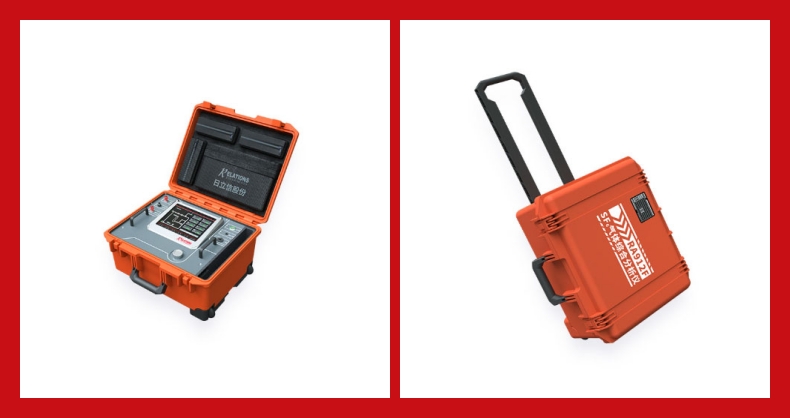
Yes, most SF6 gas analyzers are designed to be portable and field-ready, featuring compact, rugged enclosures—often in pull-handle trolley cases with wheels—for easy transport. They are battery-powered, operate in a wide temperature range, and function reliably in substation environments. Their lightweight design and integrated handles make them suitable for on-site testing of GIS, circuit breakers, and other high-voltage equipment without requiring lab conditions.
Many professional-grade SF6 gas analyzers are designed to comply with key international standards such as IEC 60480 (guidelines for reusing SF6) and IEEE C37.122 (requirements for gas-insulated substations). Compliance ensures accurate measurement of gas quality, safe handling, and alignment with industry best practices for maintenance and emissions control. However, compliance varies by model and manufacturer, so users should verify certification documentation before purchase.