
2025-12-03
If you have any needs regarding SF6 gas recovery, purification, and recycling, please feel free to contact us using the information below! We offer high-quality, standardized SF6 gas processing equipment that ensures the purity of recycled SF6 gas and helps you save on the cost of purchasing new gas.
| Phone Number: | +86-0371-68988008 |
|---|---|
| Email: | [email protected] |
| Address: | High-new Tech Zone Zhengzhou, Henan, China |
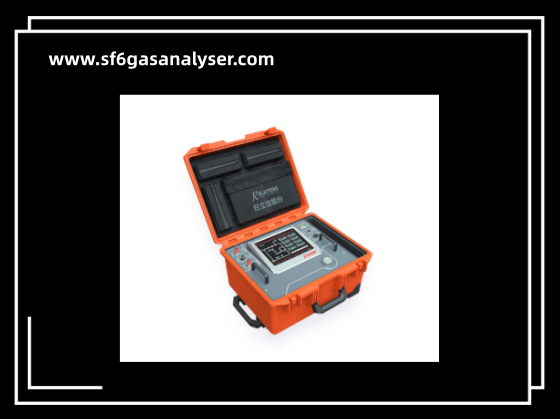
In the realm of high-voltage electrical engineering, sulfur hexafluoride (SF6) gas plays a pivotal role as an insulating and arc-quenching medium in switchgear, circuit breakers, and gas-insulated substations (GIS). However, the performance and safety of this equipment depend heavily on the purity and composition of the SF6 gas used. This is where an SF6 analyzer for quality control in electrical testing labs becomes indispensable. As utilities, manufacturers, and independent testing facilities strive to meet stringent international standards, deploying a reliable SF6 analyzer has transitioned from a best practice to a regulatory necessity.
This article explores the critical role of the SF6 analyzer for quality control in electrical testing labs, its key features, compliance requirements, and how it enhances operational reliability—while also addressing common buyer considerations for professionals seeking such instrumentation.
SF6 is prized for its exceptional dielectric strength—roughly 2.5 times that of air—and its ability to rapidly extinguish arcs during switching operations. However, its effectiveness diminishes significantly if contaminated by moisture (H₂O), air (N₂/O₂), or decomposition byproducts like sulfur dioxide (SO₂), hydrogen fluoride (HF), or carbon tetrafluoride (CF₄). These impurities can arise from:
Even trace levels of moisture can lead to corrosive reactions inside GIS compartments, causing insulation failure or catastrophic breakdowns. Therefore, rigorous quality control of SF6 gas before installation or after recovery is essential—especially in accredited electrical testing laboratories that validate equipment performance for grid operators and OEMs.
An SF6 analyzer for quality control in electrical testing labs is a precision instrument designed to measure multiple gas parameters simultaneously, including:
Modern analyzers integrate sensors based on infrared (IR) absorption, electrochemical cells, and capacitive polymer technology to deliver fast, accurate, and repeatable results. In a controlled lab environment, these devices support:
By embedding an SF6 analyzer into standard operating procedures, testing labs not only uphold technical integrity but also mitigate liability risks associated with substandard gas handling.
When selecting an SF6 analyzer for quality control in electrical testing labs, consider the following attributes:
Top-tier analyzers measure SF6 purity, moisture, SO₂, HF, and air in a single test cycle. This eliminates cross-instrument variability and streamlines workflows.
Look for devices with:
These specs are crucial for detecting early-stage degradation.
Ensure the analyzer comes with NIST- or PTB-traceable calibration certificates. Regular recalibration intervals (typically annually) should be supported by the manufacturer.
Integrated software that logs results, timestamps tests, and exports PDF/CSV reports simplifies compliance with quality management systems like ISO 9001 or ISO/IEC 17025.
Unlike ruggedized field units, lab analyzers benefit from stable power supplies, benchtop form factors, and minimal need for battery operation—allowing for higher sensor stability and longer lifespans.
Electrical testing labs must align their SF6 testing protocols with globally recognized standards, including:
An SF6 analyzer for quality control in electrical testing labs must be capable of demonstrating compliance with these benchmarks. Many leading models include pre-programmed test templates aligned with IEC limits, reducing human error during interpretation.