
2025-12-23
If you have any needs regarding SF6 gas recovery, purification, and recycling, please feel free to contact us using the information below! We offer high-quality, standardized SF6 gas processing equipment that ensures the purity of recycled SF6 gas and helps you save on the cost of purchasing new gas.
| Phone Number: | +86-0371-68988008 |
|---|---|
| Email: | [email protected] |
| Address: | High-new Tech Zone Zhengzhou, Henan, China |
In the operation and maintenance of gas-insulated switchgear (GIS), circuit breakers, and other high-voltage equipment, SF6 (sulfur hexafluoride) serves as the primary insulating and arc-quenching medium. However, its performance—and safety—depends critically on purity. One of the most common and dangerous contaminants is oxygen (O₂), often introduced through air ingress during servicing or due to seal degradation.
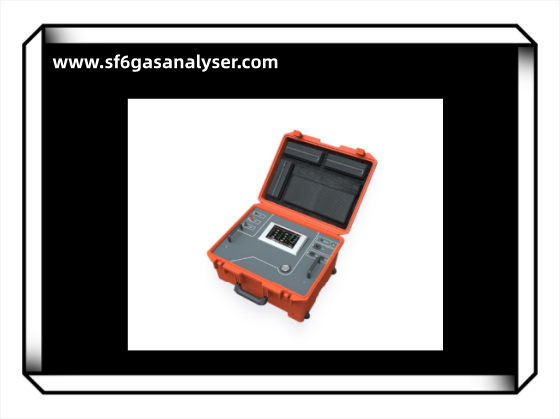
To safeguard grid reliability, personnel health, and regulatory compliance, utilities and industrial operators must use a professional SF6 gas analyzer for oxygen content analysis. This article explains why oxygen detection matters, how modern analyzers measure it accurately, and what to look for when selecting equipment—especially in regions with strict environmental and safety standards like the EU, GCC, and Southeast Asia.
While moisture and decomposition byproducts like SO₂ receive significant attention, oxygen contamination is equally critical—yet often overlooked. Air is ~21% oxygen and ~78% nitrogen; even minor leaks can introduce both into GIS compartments.
Elevated oxygen levels in SF6 lead to:
According to IEC 60480, the international standard for reused SF6, the combined concentration of air (N₂ + O₂) must not exceed 0.2% by volume—equivalent to ≤2,000 ppm total air, or roughly ≤420 ppm O₂.
Without a dedicated SF6 gas analyzer for oxygen content analysis, this contamination may go undetected until failure occurs.
Not all SF6 analyzers can reliably detect oxygen. Many rely solely on NDIR (non-dispersive infrared) sensors, which are excellent for SF6 purity but insensitive to O₂ and N₂—both of which are IR-inactive gases.
To accurately quantify oxygen, professional analyzers integrate one of two proven technologies:
🔍 Key Insight: A true SF6 gas analyzer for oxygen content analysis combines NDIR for SF6 purity and an electrochemical sensor for O₂—providing a complete impurity profile.
Some basic SF6 analyzers estimate air content indirectly:
This approach is fundamentally flawed because:
For mission-critical applications, direct oxygen measurement is non-negotiable.
Global standards mandate explicit control of oxygen and air in SF6:
Utilities undergoing audits by bodies like EGAT (Thailand), SEC (Saudi Arabia), or NERC (North America) increasingly require timestamped, digital logs showing actual O₂ readings—not inferred values.
When evaluating equipment, ensure it offers:
✅ Dedicated electrochemical O₂ sensor (not inferred)
✅ Detection range down to 10–50 ppm for trace monitoring
✅ Simultaneous measurement of SF6 purity, moisture, SO₂, and O₂
✅ IEC 62271-4 certification
✅ Data logging with export capability (USB/Bluetooth) for compliance
✅ Factory calibration traceable to ISO/IEC 17025
Avoid low-cost handhelds that lack direct O₂ sensing—they create a false sense of security.
A utility in Malaysia recently averted a 132 kV GIS outage when their SF6 gas analyzer for oxygen content analysis detected O₂ at 620 ppm during routine breaker maintenance. Investigation revealed a degraded O-ring on a valve manifold. The component was replaced, and gas was purified—avoiding an estimated RM 3.5 million in downtime and equipment damage.
Without direct oxygen measurement, the issue would have remained hidden.
Assuming SF6 purity equals safety is a dangerous oversight. Oxygen contamination is silent, insidious, and consequential. Only a professional SF6 gas analyzer for oxygen content analysis provides the precision, compliance, and confidence needed for modern high-voltage operations.
For utilities, EPC firms, and industrial operators committed to asset integrity and personnel protection, investing in direct oxygen measurement isn’t optional—it’s essential.
Don’t guess. Measure. Protect.