
2025-12-08
If you have any needs regarding SF6 gas recovery, purification, and recycling, please feel free to contact us using the information below! We offer high-quality, standardized SF6 gas processing equipment that ensures the purity of recycled SF6 gas and helps you save on the cost of purchasing new gas.
| Phone Number: | +86-0371-68988008 |
|---|---|
| Email: | [email protected] |
| Address: | High-new Tech Zone Zhengzhou, Henan, China |
Sulfur hexafluoride (SF6) remains indispensable in high-voltage electrical systems—used in gas-insulated switchgear (GIS), circuit breakers, and transformers for its unmatched dielectric strength. Yet SF6 is also the most potent greenhouse gas ever evaluated by the IPCC, with a global warming potential (GWP) of 23,500 over 100 years. Just 1 kg of leaked SF6 equals 23.5 tonnes of CO₂.
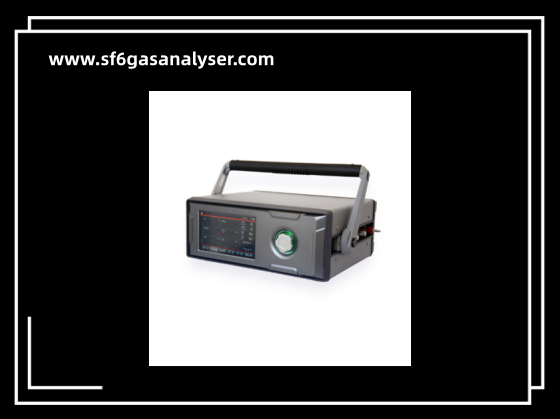
Given tightening global regulations—from the EU F-Gas Regulation to the U.S. EPA GHG Reporting Rule—utilities can no longer rely on outdated leak-check methods. Instead, they need a precise, auditable, and field-ready solution: the SF6 gas analyzer for leakage detection.
This article explains why advanced SF6 gas analyzers are essential, how they outperform traditional tools, what features define top-tier performance, and how to integrate them into compliant, data-driven maintenance programs.
Many teams still use:
These methods fail under modern regulatory frameworks that require:
Without an SF6 gas analyzer for leakage detection, organizations risk non-compliance, financial penalties, and uncontrolled emissions.
Unlike qualitative sniffers, a true SF6 gas analyzer for leakage detection measures SF6 concentration in ambient air with laboratory-grade precision—often down to parts per billion (ppb). Two sensor technologies dominate:
Both enable leak rate estimation when combined with compartment volume and airflow models—critical for prioritizing repairs.
Not all devices labeled “SF6 detectors” qualify as analyzers. For regulatory-grade performance, ensure your unit includes:
| Feature | Why It Matters |
|---|---|
| Detection Limit ≤1 ppm (ideally <100 ppb) | Finds micro-leaks before mass loss occurs |
| Real-Time Digital Readout | Instant concentration in ppm/ppb |
| GPS & Timestamp Logging | Geotags leaks for GIS mapping and audit trails |
| Bluetooth/Wi-Fi Connectivity | Syncs data to CMMS, EAM, or cloud platforms |
| Intrinsically Safe Certification (ATEX/IECEx) | Required for use near energized equipment |
| Calibration Alerts & Self-Diagnostics | Ensures measurement integrity |
| 8+ Hour Battery Life | Supports full substation inspections |
Global mandates now treat every gram of SF6 as reportable:
An SF6 gas analyzer for leakage detection provides the quantifiable, timestamped evidence needed to pass audits and avoid fines (which can exceed $100,000 per violation).
Consider a single 400 kV GIS bay containing 200 kg of SF6:
For a utility managing 100 bays, this translates to:
Maximize detection accuracy with these field-proven steps:
✅ Survey During Low-Wind Conditions
Wind dilutes SF6 plumes—inspect early morning or in sheltered areas.
✅ Target High-Risk Components
Focus on: flanges, valve stems, bushing seals, weld joints, and density monitors.
✅ Use Tracer Gas for Pressurized Testing
Inject SF6/N₂ mix into de-energized compartments to simulate operational pressure.
✅ Verify Repairs Within 48 Hours
Re-scan after gasket replacement or welding to confirm seal integrity.
✅ Integrate Data into Asset Management
Link leak history to predictive maintenance and lifecycle planning.
Always choose analyzers compliant with IEC 61010-1 (electrical safety) and aligned with CIGRE Technical Brochure 276.
An SF6 gas analyzer for leakage detection is far more than a maintenance tool—it’s a compliance engine, emissions tracker, and reliability safeguard. In an era of net-zero commitments and strict F-gas controls, precision leak management separates leading utilities from laggards.
By investing in certified, connected, and sensitive analyzers, organizations not only meet regulatory obligations—they demonstrate environmental leadership, reduce operational costs, and future-proof their infrastructure against SF6 phase-downs.
The bottom line? When it comes to SF6, what you can’t measure, you can’t manage. With the right SF6 gas analyzer for leakage detection, you measure everything—and control your emissions with confidence.