
2026-07-10
If you have any needs regarding SF6 gas recovery, purification, and recycling, please feel free to contact us using the information below! We offer high-quality, standardized SF6 gas processing equipment that ensures the purity of recycled SF6 gas and helps you save on the cost of purchasing new gas.
| Phone Number: | +86-0371-68988008 |
|---|---|
| Email: | [email protected] |
| Address: | High-new Tech Zone Zhengzhou, Henan, China |
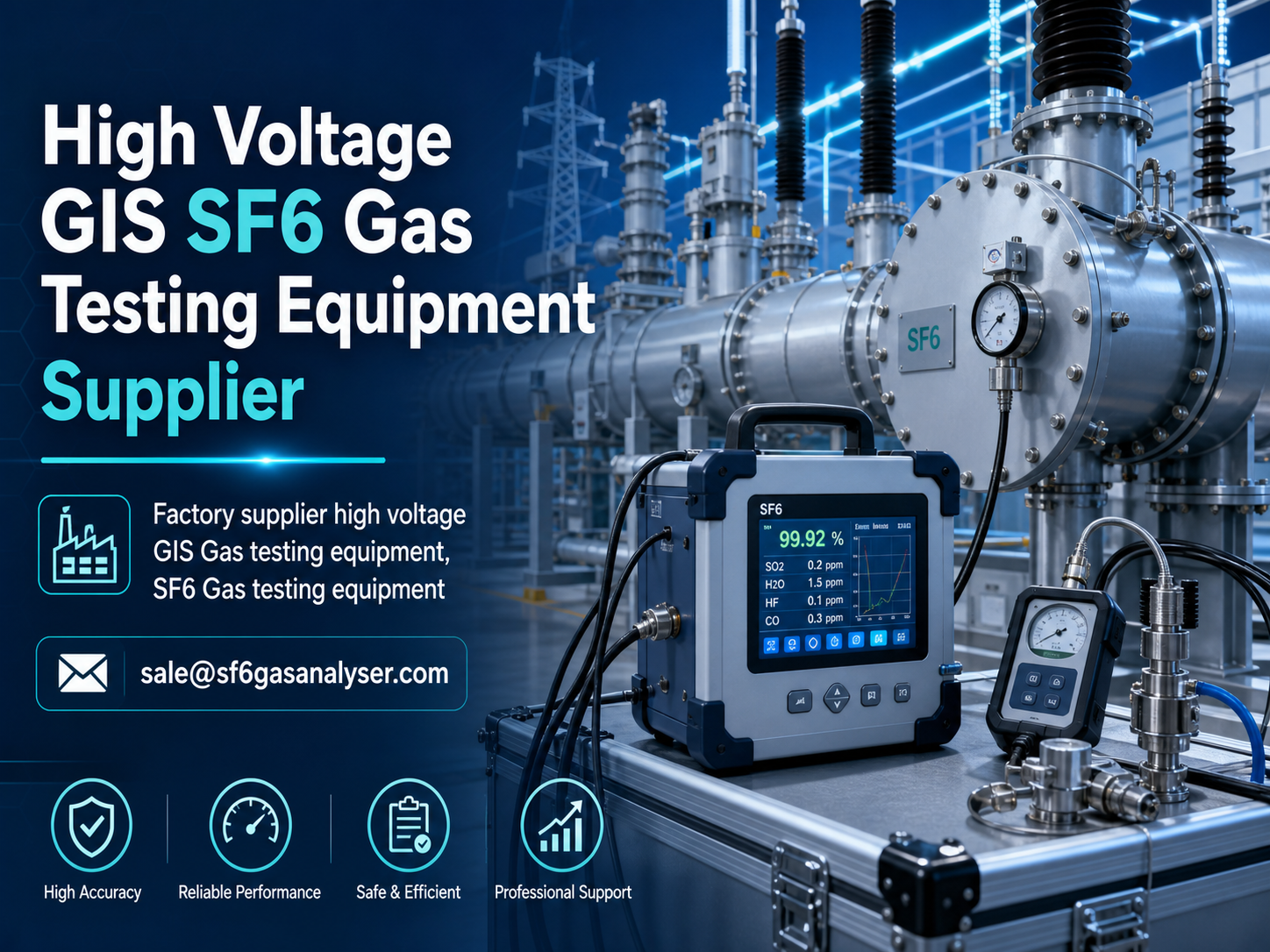
High-voltage gas-insulated switchgear (GIS) is widely used in substations, power plants, rail transit systems, and large industrial facilities because of its compact structure, high reliability, and excellent insulation performance. To maintain GIS safety and operational stability, accurate gas monitoring is essential. As a professional Factory supplier high voltage GIS Gas testing equipment provider, manufacturers must deliver instruments that help utilities and maintenance teams verify SF6 gas quality, detect leaks, measure moisture, and support compliance with international electrical safety standards. This article explains the advantages, technical parameters, applications, purchasing guidance, and frequently asked questions related to SF6 Gas testing equipment.
SF6 gas has been used for decades in high-voltage GIS due to its excellent dielectric strength and arc-quenching capability. However, gas quality can degrade over time because of moisture ingress, decomposition after electrical discharge, leakage, or improper gas handling. Poor gas condition may reduce insulation performance, accelerate corrosion, and increase the risk of equipment failure.
Reliable GIS gas testing allows operators to assess the actual operating condition of switchgear without unnecessary dismantling. Routine testing also supports preventive maintenance strategies, helping asset managers identify early warning signs before faults develop into costly outages. In modern power networks, SF6 Gas testing equipment is not only a maintenance tool but also a critical part of substation safety management and environmental responsibility.
Professional high voltage GIS gas testing equipment is designed to measure key gas indicators such as humidity, purity, decomposition products, pressure, and leakage concentration. Multi-parameter testing helps engineers make comprehensive judgments rather than relying on a single value. For example, moisture content indicates insulation risk, while decomposition products may suggest partial discharge, arcing, or internal overheating.
Industrial GIS maintenance often takes place in complex environments, including outdoor substations, offshore platforms, industrial plants, and mobile service vehicles. A qualified Factory supplier high voltage GIS Gas testing equipment manufacturer should provide instruments with robust housing, stable sensors, anti-interference design, and reliable calibration performance. This ensures repeatable results under field conditions and supports long-term use in demanding environments.
Because SF6 is a regulated greenhouse gas, responsible testing should minimize emissions. Advanced SF6 Gas testing equipment can be configured with closed-loop sampling, gas recovery bags, filters, or return-to-compartment functions. These designs help users reduce gas loss, comply with environmental management requirements, and lower the cost of replenishing SF6.
Modern testing instruments typically feature touchscreen interfaces, automatic temperature compensation, data storage, USB export, and optional Bluetooth or cloud-based reporting. These functions simplify daily operation and make it easier to maintain traceable records for audits, maintenance reports, and asset lifecycle management.
The following table provides a typical technical reference for high voltage GIS gas testing equipment. Actual specifications may vary depending on the model and customized configuration.
| Item | Typical Technical Parameter |
| Applicable Gas | SF6 gas and SF6 mixed gases used in high-voltage GIS equipment |
| Measurement Parameters | SF6 purity, moisture/dew point, decomposition products, pressure, optional leak concentration |
| SF6 Purity Range | 0–100% by volume |
| Purity Accuracy | Typically ±0.5% or better, depending on sensor configuration |
| Dew Point Range | -80°C to +20°C typical measuring range |
| Moisture Accuracy | ±2°C dew point or better under standard conditions |
| Decomposition Gas Detection | SO2, H2S, CO, HF or optional multi-gas sensor combinations |
| Sampling Method | Pump suction, pressure sampling, or closed-loop gas return |
| Response Time | Usually 30–120 seconds depending on gas type and pipeline length |
| Power Supply | Rechargeable lithium battery and AC adapter options |
| Data Storage | Built-in memory with exportable test reports |
| Operating Temperature | -10°C to +50°C typical field operating range |
| Compliance Reference | Designed for use with IEC and relevant electrical maintenance practices |
Transmission and distribution substations rely on GIS equipment for switching and protection. Regular gas testing helps confirm that insulation gas remains within acceptable operational limits. Maintenance teams can use SF6 purity analyzers, dew point meters, and decomposition gas detectors during scheduled inspections, commissioning, and troubleshooting.
Before new GIS equipment is energized, technicians must verify gas filling quality, pressure stability, moisture level, and sealing performance. Using professional SF6 Gas testing equipment during commissioning helps ensure that the GIS system meets manufacturer requirements and site acceptance criteria.
Thermal power plants, hydropower stations, wind farms, petrochemical plants, metallurgy facilities, and data centers often use high-voltage switchgear for critical power distribution. Gas testing equipment supports continuous reliability by enabling preventive diagnostics and reducing unexpected downtime.
SF6 leak detection is important for both equipment reliability and environmental reporting. Portable leak detectors can locate small leaks around flanges, valves, density relays, gas pipes, and compartment seals. Combined with gas recovery processes, this supports responsible SF6 lifecycle management.
Different applications require different test parameters. If the goal is routine maintenance, a combined SF6 purity and moisture analyzer may be sufficient. For fault diagnosis, decomposition gas analysis should be included. For environmental control, a high-sensitivity leak detector may be necessary. Before purchasing, list the GIS voltage level, gas compartment size, test frequency, and required parameters.
The accuracy of SF6 Gas testing equipment depends largely on sensor performance and calibration traceability. Select a supplier that provides calibration certificates, recommended calibration intervals, spare sensors, and technical service support. Instruments used for critical electrical maintenance should be calibrated regularly according to the manufacturer’s instructions and internal quality procedures.
For frequent GIS testing, gas consumption and operator safety are important. Choose equipment with automatic flow control, overpressure protection, built-in filtration, and optional gas recovery. Closed-loop testing is especially valuable where SF6 emission reduction is a priority.
GIS equipment from different manufacturers may use different gas valves and connectors. A reliable factory supplier can provide suitable adapters, sampling hoses, pressure reducers, and customized connection kits. This reduces installation delays and prevents unsafe temporary connections.
Industrial buyers should not evaluate only the purchase price. Training, documentation, maintenance service, spare parts, and engineering response time affect the total lifecycle value of the instrument. For project-specific recommendations, buyers can request a free technical consultation by contacting [email protected].
When using high voltage GIS gas testing equipment, operators should follow site electrical safety procedures, lockout/tagout rules where applicable, and manufacturer operating manuals. Testing should be performed by trained personnel using approved hoses, fittings, pressure-rated components, and personal protective equipment. Gas sampling should avoid unnecessary emissions and should never be conducted using damaged pipelines or incompatible connectors.
Results should be recorded with equipment ID, gas compartment information, ambient conditions, instrument serial number, calibration status, and test values. This documentation improves traceability and supports maintenance decision-making. Where SF6 handling regulations apply, users should also follow local environmental reporting and gas recovery requirements.
A specialized factory supplier understands both instrument design and field application requirements. Compared with general distributors, a manufacturer can provide flexible configurations, faster technical feedback, and customized on-site solutions for substations, power plants, and industrial facilities. Buyers needing tailored GIS gas analysis plans, connector matching, or batch procurement support can contact [email protected] for one-on-one guidance from engineers.
For overseas projects, supplier experience with export packaging, multilingual documentation, remote support, and international voltage-sector maintenance practices is also important. A professional manufacturer can help reduce procurement risk and ensure that the selected instrument fits actual operational needs.
The most common parameters include SF6 purity, dew point or moisture content, gas pressure, and decomposition products such as SO2 or H2S. Leak detection may also be required for environmental and maintenance reasons.
Testing frequency depends on voltage level, equipment age, operating conditions, utility standards, and maintenance strategy. Many facilities perform routine checks during scheduled maintenance, after gas filling, after abnormal alarms, or before commissioning.
Yes. Portable SF6 Gas testing equipment can be used across multiple compartments if the correct adapters and sampling procedures are applied. Operators should avoid cross-contamination by using clean hoses and proper purging methods.
It is safe when performed by trained personnel using suitable pressure-rated accessories and following operating procedures. Safety risks mainly come from incorrect connections, overpressure, contaminated gas, or improper handling of decomposition products.
The best approach is to provide GIS voltage level, gas compartment details, required test parameters, site conditions, and reporting needs to the supplier. For customized selection and on-site solution planning, contact [email protected].
Reliable gas analysis is essential for the safe, efficient, and environmentally responsible operation of high-voltage GIS systems. Choosing a professional Factory supplier high voltage GIS Gas testing equipment partner helps ensure accurate measurement, stable field performance, gas-saving operation, and dependable technical support. By selecting the right SF6 Gas testing equipment and applying standardized testing procedures, utilities and industrial operators can improve equipment reliability, reduce maintenance risks, and support long-term power system safety.