
2026-01-27
If you have any needs regarding SF6 gas recovery, purification, and recycling, please feel free to contact us using the information below! We offer high-quality, standardized SF6 gas processing equipment that ensures the purity of recycled SF6 gas and helps you save on the cost of purchasing new gas.
| Phone Number: | +86-0371-68988008 |
|---|---|
| Email: | [email protected] |
| Address: | High-new Tech Zone Zhengzhou, Henan, China |
The management of Sulfur Hexafluoride (SF6) in high-voltage electrical systems has transitioned from simple maintenance to a strictly regulated environmental and economic discipline. Because SF6 is a potent greenhouse gas, the power industry now prioritizes equipment that offers high-precision diagnostics alongside zero-emission gas handling. This report evaluates the technical specifications of integrated SF6 analyzers and provides a price comparison framework based on total cost of ownership.
When performing an SF6 gas analyzer price comparison, the hardware must be categorized by its measurement capabilities and gas processing functions. Basic models typically offer single-parameter testing, such as purity or humidity. In contrast, comprehensive analyzers integrate five major metrics: purity, humidity, and three decomposition products (SO2, CO, and H2S).
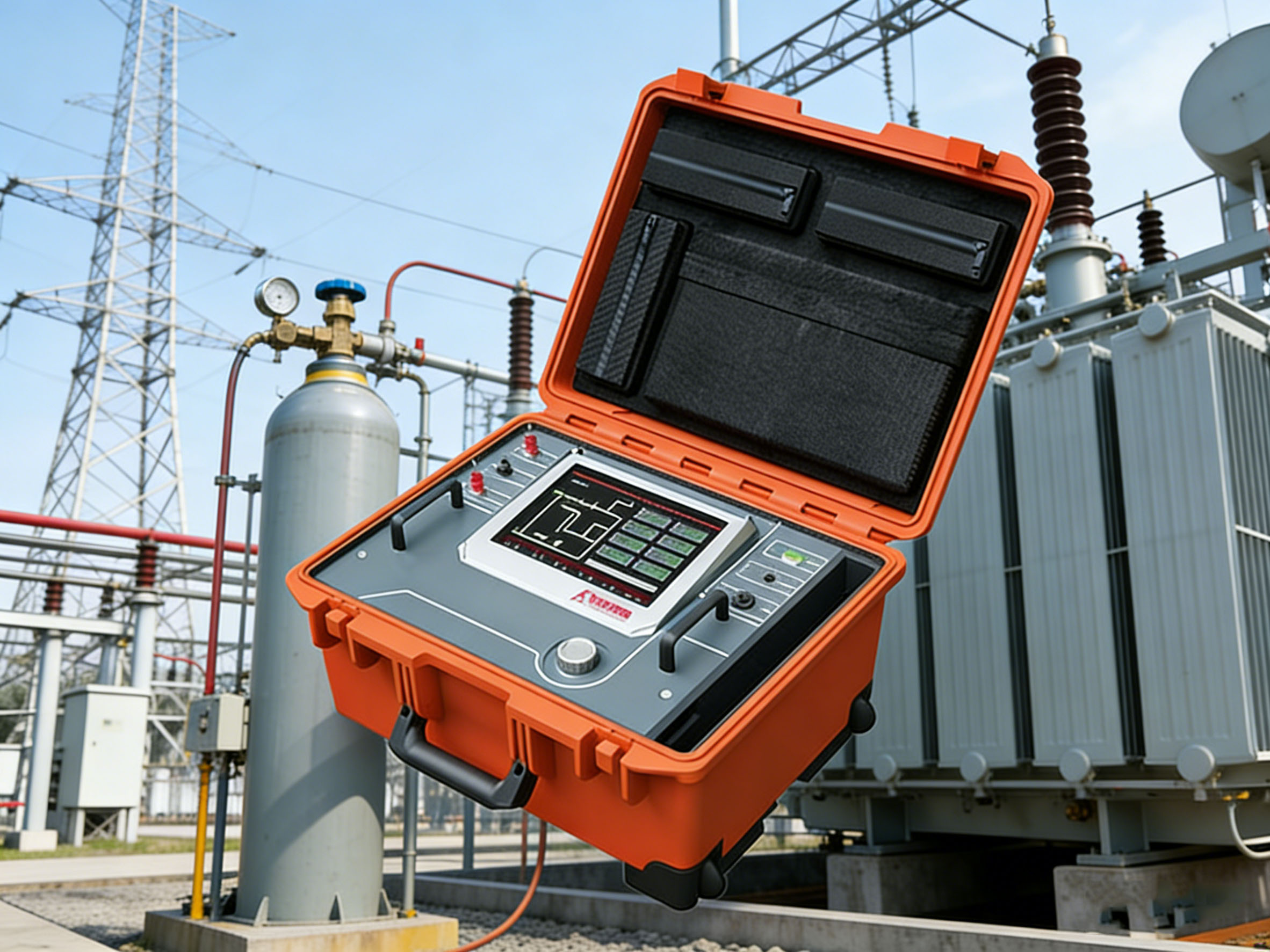
The specific model under review features a thermal conductivity sensor for purity (0-100% range) and electrochemical sensors for decomposition products. A critical differentiator in its market pricing is the “Zero-Loss” recovery and recharge system. This allows the user to return the sampled gas directly to the source or an external container at pressures up to 0.8MPa, effectively eliminating the environmental footprint and gas waste associated with traditional testing.
Several core components determine the market value and initial purchase price of these instruments:
Sensor Precision and Response Time: Instruments utilizing laser-based humidity sensors (TDLAS) typically command a higher price than resistance-capacitance versions. As seen in the technical parameters, a laser sensor offers a 30-second response time compared to 3 minutes for resistance-capacitance, providing significant time savings in the field.
Gas Handling Integration: Analyzers equipped with internal compressors and “One-Click” recovery functions are priced significantly higher than “vent-only” units. However, this integrated hardware reduces the need for auxiliary equipment like external recovery pumps and storage bags, which must be factored into the final price comparison.
Diagnostic Software: Advanced units include an expert diagnosis system. This software compares real-time data against international standards to provide automated pass/fail judgments. The inclusion of high-capacity storage (up to 10,000 data points) and USB export functionality also adds to the unit’s value proposition.
A comprehensive SF6 gas analyzer price comparison should include the following tiers of equipment:
Tier 1: Basic Portable Testers Focus: Purity or Humidity only. Function: Measurement without recovery. Price Level: Low entry cost.
Tier 2: Multi-Gas Analyzers Focus: Purity, Humidity, and Decomposition Products. Function: High accuracy measurement, usually requiring external gas collection. Price Level: Moderate.
Tier 3: Integrated Zero-Emission Diagnostic Systems Focus: Full suite of gas analysis (5+ parameters). Function: Integrated recovery, direct recharge, and expert diagnosis. Price Level: High initial investment, but lowest long-term operational cost.
While the initial price of an integrated analyzer is higher, the return on investment is driven by three primary factors:
First, gas conservation. By recharging the sample gas back into the equipment (up to 0.8MPa), utilities avoid the cost of replacing vented SF6. With rising costs of high-purity SF6, these savings become substantial over the lifespan of the device.
Second, maintenance efficiency. The modular design of the described analyzer allows for independent sensor replacement or repair. This reduces downtime and eliminates the need to return the entire unit to the manufacturer for routine sensor calibration or failure.
Third, regulatory compliance. As global regulations on SF6 emissions tighten, the “zero-pollution” capability of integrated units protects organizations from potential fines and simplifies carbon reporting requirements.
In summary, an SF6 gas analyzer price comparison reveals that high-end integrated units represent a strategic investment for modern power utilities. By combining rapid measurement (response times as low as 30s) with automated recovery and recharge, these instruments provide the technical rigor required for high-voltage maintenance while meeting environmental sustainability goals.
For procurement professionals, the focus should remain on models that offer a broad input pressure range (0.4 to 2.0 MPa), high-capacity data logging, and a robust physical design suitable for field transport. These features ensure that the instrument remains a viable asset throughout its intended operational life.